Electroplating and surface treatment processes can generate fumes, vapours, mist, or airborne contaminants depending on the chemicals, temperatures, agitation methods, and production conditions involved. Local exhaust ventilation captures these emissions, but extraction alone may not be the complete solution.
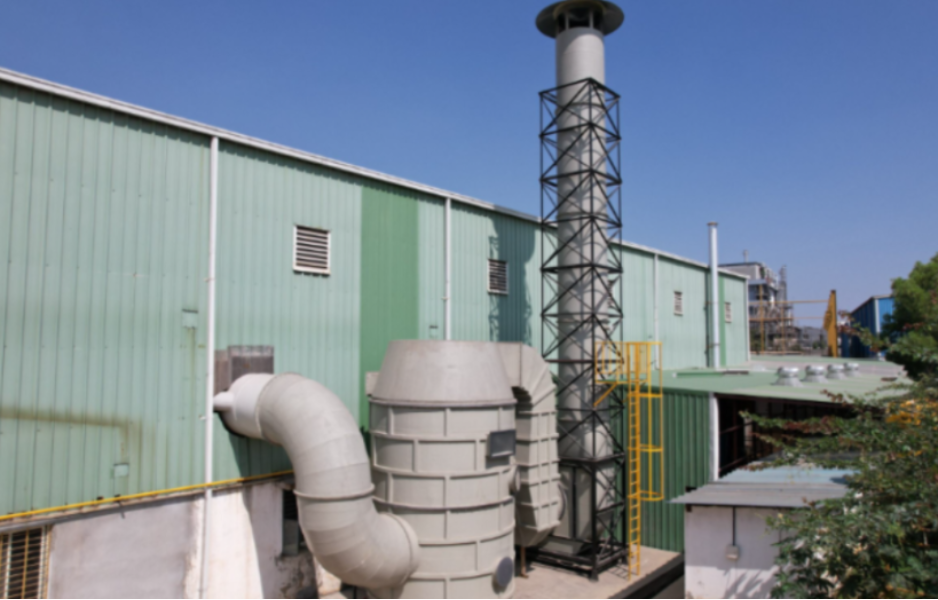
Where air treatment is required, a Chemical Fume Scrubber for Plating applications can form an important part of the exhaust system.
Selecting one requires understanding what is being extracted rather than simply choosing a scrubber based on duct diameter or fan capacity.
What Does a Fume Scrubber Do
An exhaust system first captures contaminated air near the process source and transports it through ducting.
A wet scrubber typically brings the contaminated air into contact with a scrubbing liquid. Depending on the contaminant and system design, this contact allows targeted pollutants to be transferred into the liquid phase.
The treated air then continues through the exhaust arrangement.
The effectiveness of the system depends on multiple factors, including contaminant characteristics, airflow, contact method, scrubbing chemistry, pressure drop, liquid circulation, and maintenance condition.
Identify the Contaminant Before Selecting Equipment
Different plating processes can produce different emissions.
The first step should therefore be identifying:
- Process chemistry
- Chemical concentration
- Bath temperature
- Tank dimensions
- Number of extracted tanks
- Operating hours
- Required airflow
- Expected contaminant characteristics
Without this information, scrubber selection becomes largely guesswork.
A system intended for one chemical environment should not automatically be assumed suitable for another.
Scrubber Capacity Must Match Exhaust Airflow
The extraction system and scrubber cannot be designed independently.
If the scrubber creates a significant pressure drop, the exhaust fan must be capable of overcoming that resistance while maintaining the required airflow at the process tanks.
Similarly, changing ductwork or adding additional extraction points later can alter system performance.
For this reason, hood design, ducts, scrubber, fan, and stack should be assessed as one airflow network.
Construction Materials Need Chemical Compatibility
The scrubber body, internals, piping, pumps, nozzles, mist eliminators, fasteners, and duct connections may be exposed to corrosive conditions.
Material selection should reflect the actual chemical environment.
Chemical compatibility is particularly important because deterioration can affect both equipment life and system reliability.
Maintenance Determines Long Term Performance
A scrubber that is correctly sized but poorly maintained may gradually lose effectiveness.
Plant teams should have access to inspect and maintain components such as:
- Spray nozzles
- Recirculation pumps
- Liquid tanks
- Mist eliminators
- Packing where applicable
- Instrumentation
- Drain arrangements
- Duct connections
Operating parameters should also be monitored according to the process and equipment design.
Questions to Ask Before Procurement
Bangalore procurement and plant teams evaluating a Chemical Fume Scrubber for Plating should ask whether the supplier has considered the complete extraction requirement rather than quoting the scrubber as an isolated unit.
Useful questions include:
- What airflow has been used for sizing?
- What contaminants are being considered?
- What pressure drop is expected?
- What materials are proposed?
- How is scrubbing liquid circulated?
- How will mist carryover be controlled?
- What maintenance access is provided?
- How does the scrubber integrate with the exhaust fan?
- What instrumentation is included?
- What space and utility requirements apply?
Integrating the System With the Plating Plant
AK Automation Systems works with electroplating and surface finishing equipment projects in Bangalore where fume capture and treatment can be coordinated with the production line.
This integrated approach is useful because exhaust requirements influence factory layout, duct routing, structural supports, electrical loads, and maintenance access.
A properly selected scrubber should reflect the actual chemistry and airflow of the plating process. For manufacturing units across Bangalore and Karnataka, defining those operating conditions before procurement provides a stronger foundation for selecting suitable air pollution control equipment and integrating it into the overall surface finishing facility.
Keywords


