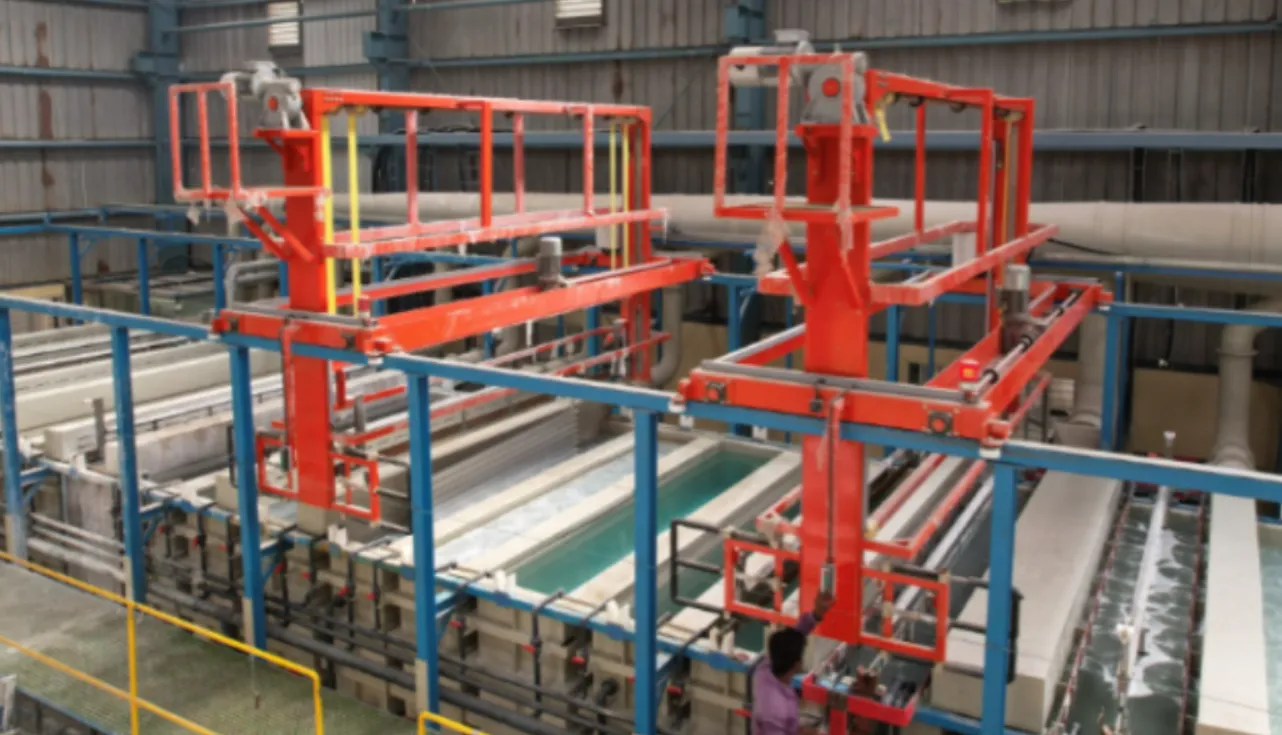
Aluminium is widely used in architectural products, engineering components, electrical equipment, transportation systems, consumer products, and precision manufacturing. Anodising modifies the aluminium surface through an electrochemical process, creating an oxide layer that can improve corrosion behaviour, surface durability, appearance, and suitability for subsequent colouring or sealing.
For manufacturers considering in-house finishing, understanding Anodising Plant Equipment is essential before deciding tank sizes or production capacity.
Anodising Begins With Surface Preparation
The final anodised surface reflects what happens before the anodising tank.
Depending on the component and finish specification, pretreatment can include cleaning, degreasing, etching, desmutting, and rinsing. Surface contamination or inconsistent pretreatment can produce visible differences after anodising.
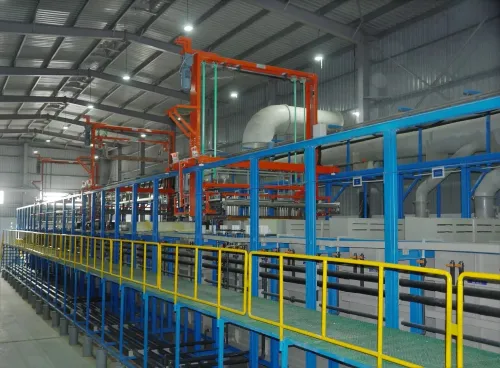
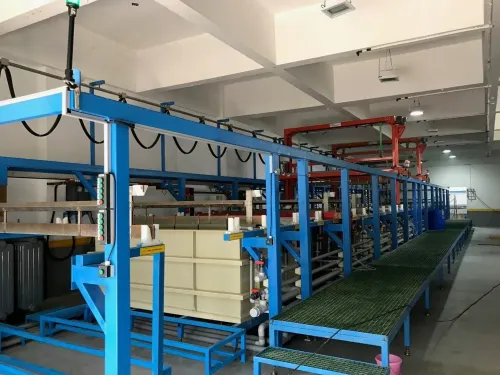
This is why an anodising plant should be planned as a complete process line rather than as an isolated anodising tank.
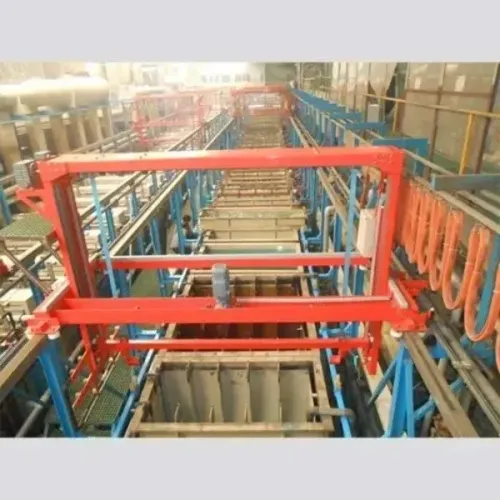
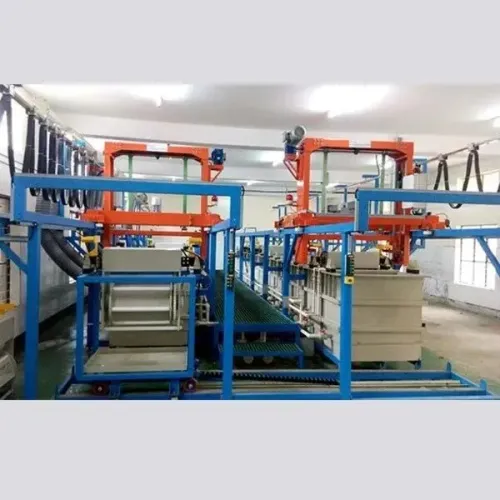
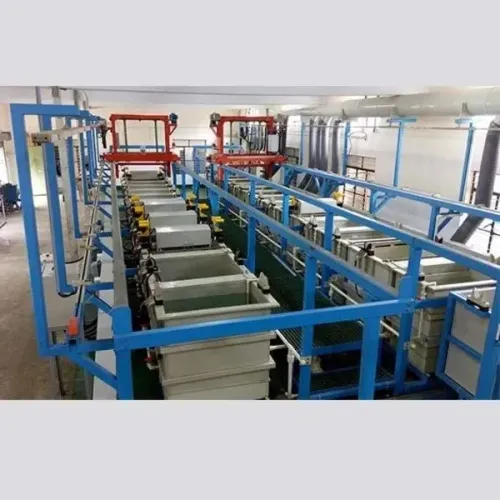
Major Equipment Used in an Anodising Line
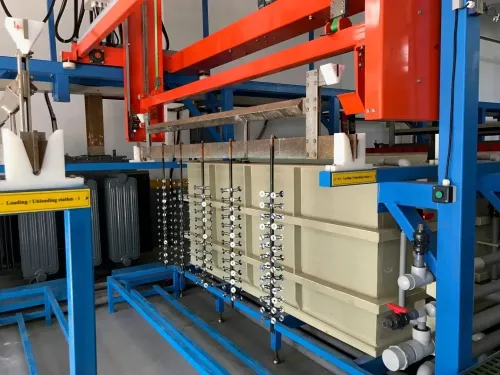
A typical installation can contain:
- Chemical treatment tanks
- Rinse tanks
- Anodising tanks
- Rectifiers
- Busbars and electrical connections
- Heating or cooling arrangements
- Agitation systems
- Material handling equipment
- Colouring tanks where required
- Sealing tanks
- Extraction systems
- Control panels
- Water and wastewater handling arrangements
The exact plant configuration changes according to the aluminium alloy, component dimensions, finish specification, production volume, and chosen anodising process.
Why Rectifier Capacity Is Important
The anodising stage requires controlled electrical power. Rectifier sizing should account for component surface area, operating current density, process requirements, and expected production loading.
Electrical contact between the workpiece and rack is equally important. Poor contact can interfere with process consistency even when rectifier capacity is adequate.
Rack design therefore needs to consider both mechanical support and electrical conductivity.
Temperature Can Influence Process Stability
Anodising reactions generate heat, making temperature management an important part of equipment planning.
Depending on process chemistry and production loading, cooling may be required to maintain the bath within the intended operating range. Temperature sensors, circulation arrangements, and suitable cooling equipment can help stabilize conditions during continuous production.
Ignoring heat load during plant design can create capacity limitations once production increases.
Component Size Changes the Entire Plant Layout
A manufacturer processing small machined parts has very different requirements from a facility anodising long aluminium profiles or large fabricated components.
Tank dimensions affect chemical volume, floor loading, heating and cooling requirements, extraction design, material transfer, and water consumption.
Large components also require adequate lifting height and safe movement between process tanks.
This is why component drawings and maximum envelope dimensions are valuable during equipment specification.
Evaluate Production Flow Before Installation
Bangalore manufacturing facilities often operate within established factory layouts where available floor area must be used efficiently.
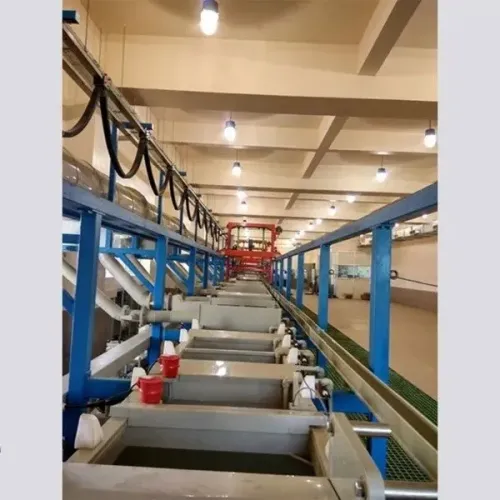
The anodising line should allow logical movement from loading through pretreatment, anodising, finishing, inspection, and unloading. Operators should not need to carry wet components unnecessarily across unrelated work areas.
Utility access and maintenance space should also remain available around critical equipment.
Environmental Controls Belong in the Initial Design
Chemical processing requires appropriate planning for ventilation, rinse water, drainage, chemical storage, and effluent treatment.
Fume extraction requirements depend on the processes used. Wastewater streams may also differ in composition and should be assessed before deciding the treatment arrangement.
AK Automation Systems works with industrial buyers evaluating Anodising Plant Equipment for Bangalore and Karnataka manufacturing applications. A useful project discussion normally begins with component details, desired finish, production capacity, available area, process chemistry, utilities, and environmental requirements.
An anodising plant performs best when electrical systems, chemical tanks, temperature management, handling equipment, rinsing, extraction, and wastewater controls are designed as one coordinated production facility. Establishing these requirements before procurement can prevent expensive layout changes after equipment reaches the factory.
Keywords