
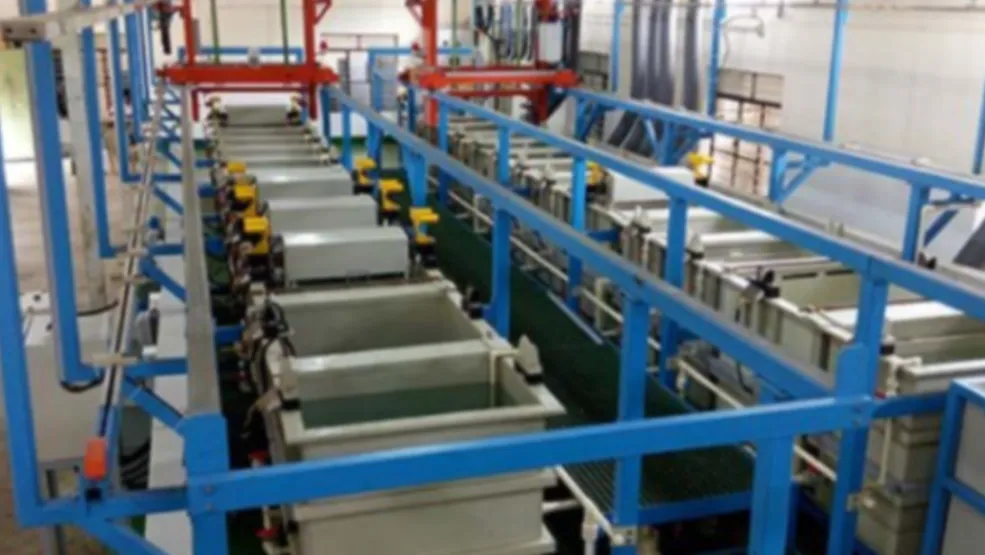
Chrome plating requirements can vary significantly depending on whether the objective is decorative appearance, functional performance, dimensional restoration, or another engineered surface requirement. Because of these differences, evaluating Chrome Plating Equipment requires a clear understanding of the intended process before comparing plant configurations.
For industrial buyers in Bangalore, this distinction is important because equipment suitable for one chrome finishing application may not be appropriate for another.
Start by Defining the Required Finish
Before discussing machinery, establish what the finished component must achieve.
Important requirements can include:
- Appearance
- Coating thickness
- Surface hardness
- Wear resistance
- Corrosion performance
- Dimensional requirements
- Component geometry
- Production quantity
These parameters determine the process sequence and influence tank capacity, electrical requirements, component fixturing, pretreatment, finishing, and quality control.
Decorative and Engineering Applications Differ
Decorative chrome processes typically focus heavily on appearance and may involve multiple underlying surface treatment stages before the final chrome layer.
Engineering or functional chrome applications may place greater emphasis on coating thickness, wear characteristics, dimensional control, and post-plating finishing.
The equipment configuration should therefore follow the application rather than treating all chrome plating as one standard process.
Rectifier Selection Needs Engineering Attention
Electrical power is a major part of electroplating performance.
Rectifier capacity should be selected using the component surface area and required current density. Busbars, contacts, racks, cables, and electrical connections also need to support the intended operating current.
Poor electrical distribution can contribute to inconsistent deposition even when the nominal rectifier rating appears adequate.
Ventilation Is a Core Plant Requirement
Chrome plating processes can require carefully designed local exhaust ventilation and appropriate air pollution control arrangements according to the chemistry and operating conditions.
The capture point should be positioned to control emissions near the source rather than relying only on general factory ventilation.
Duct sizing, hood design, fan selection, scrubber requirements, pressure losses, construction materials, and discharge arrangements should be evaluated as one system.
Compare Plant Layouts, Not Individual Machines
A quotation may list tanks and equipment correctly while still producing an inefficient factory layout.
Buyers should review how components move through:
pretreatment → rinsing → plating → post-treatment → final rinsing → finishing → inspection.
Cross movement, excessive transfer distances, limited maintenance access, and awkward loading positions can reduce productivity.
This becomes particularly important where heavy components require hoists or other mechanical handling.
What Should Be Included in a Technical Comparison
When comparing Chrome Plating Equipment, procurement managers can create a common evaluation sheet covering:
- Tank dimensions and construction
- Production capacity
- Rectifier specifications
- Heating or cooling requirements
- Component handling method
- Control system
- Extraction arrangement
- Scrubbing equipment where required
- Rinse configuration
- Wastewater collection and treatment provisions
- Maintenance access
- Installation requirements
This helps prevent decisions based solely on headline equipment prices.
Local Manufacturing Considerations
Industrial facilities in Bangalore and across Karnataka may face practical constraints including available factory height, electrical capacity, water availability, floor space, existing drainage, and expansion limitations.
AK Automation Systems works with manufacturing facilities requiring electroplating and surface finishing equipment designed around such operational parameters.
The strongest procurement decision is usually made after the component range and production process have been clearly defined. Rather than asking for a generic chrome plating plant, buyers can provide component drawings, production quantities, coating specifications, existing utilities, available layout, and desired automation level.
This enables the Chrome Plating Equipment configuration to be assessed as an integrated manufacturing system rather than a collection of individual tanks.
Keywords


