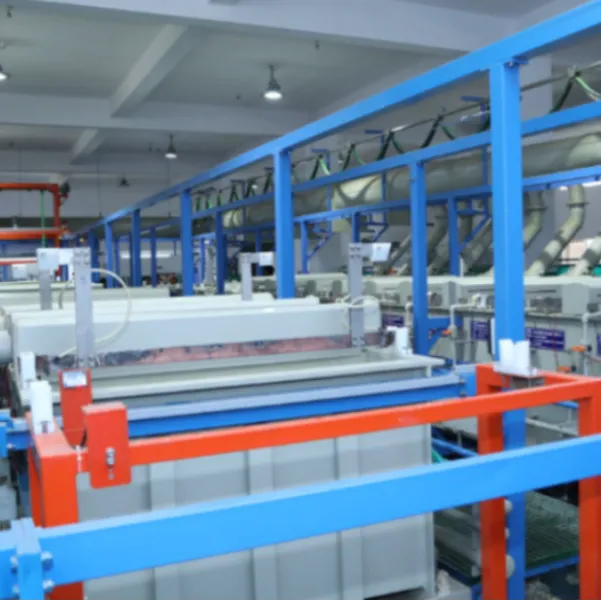
Zinc plating remains an important surface treatment for fasteners, brackets, stamped components, automotive parts, fabricated products, and general engineering hardware. For manufacturers bringing this process in-house or expanding an existing finishing section, selecting Zinc Plating Equipment requires more than comparing machine prices.
The real objective is to establish a line capable of meeting production, coating, handling, safety, and environmental requirements without creating avoidable bottlenecks.
Decide What You Will Plate First
Equipment specification should begin with the product range.
A buyer should establish the minimum and maximum component sizes, component weights, production quantities, base materials, required coating thicknesses, and post-treatment requirements.
Small components produced in large quantities may be candidates for barrel processing. Components requiring controlled contact points or protection from part-to-part impact may need rack plating.
Choosing between these methods changes the handling equipment, tank arrangement, electrical system, and achievable throughput.
Calculate Capacity From Production Data
A common purchasing mistake is specifying equipment around expected tank size instead of required output.
Capacity should be evaluated using:
- Components per batch
- Surface area per load
- Processing time
- Number of production hours
- Loading and unloading time
- Transfer time
- Planned maintenance
- Product changeovers
This provides a more realistic estimate of daily throughput.
Manufacturers should also consider future demand. A line operating near maximum capacity immediately after commissioning may leave little flexibility for production growth.
Review the Pretreatment Stages
Successful zinc plating depends on proper surface preparation.
Oil, rust, scale, and other contaminants must be addressed through suitable cleaning and activation stages. The process sequence varies according to component material and condition.
The number and size of pretreatment tanks should therefore reflect the incoming component condition rather than being copied from another plant.
Compare Automation Based on Operational Need
Manual, semi-automatic, and automatic lines can all be suitable under the right conditions.
Manual handling can offer flexibility for varied, lower-volume work. Semi-automatic systems can reduce repetitive movement while allowing operator intervention. Automated lines can provide controlled transfer sequences and more predictable processing times for larger recurring volumes.
Procurement teams should compare these options based on labour requirement, throughput, component variety, process consistency, available space, maintenance capability, and capital expenditure.
Check the Supporting Systems
The plating tanks represent only part of the investment.
A complete evaluation may need to include:
- Rectifiers
- Heating equipment
- Pumps and filters
- Agitation
- Rinsing systems
- Material handling
- Electrical controls
- Fume extraction
- Scrubbing
- Wastewater collection
- Effluent treatment
- Drying arrangements
Comparing quotations without checking the scope of these supporting systems can produce misleading cost comparisons.
Look at Operating Cost, Not Just Purchase Cost
Water consumption, electricity, heating, chemicals, exhaust power, maintenance, labour, and wastewater treatment all contribute to long-term operating expense.
For example, a poorly planned rinse system may consume unnecessary water and increase the load on the ETP. Similarly, inefficient exhaust arrangements can increase energy consumption without delivering effective capture.
Lifecycle cost should therefore be considered alongside initial equipment price.
Procurement Readiness for Bangalore Manufacturers
Bangalore's industrial base includes automotive suppliers, precision engineering companies, electrical manufacturers, aerospace vendors, hardware producers, and contract manufacturing units. Each can have different zinc finishing requirements.
Before approaching an equipment manufacturer, prepare component drawings, production forecasts, coating specifications, available floor dimensions, utility details, and preferred automation level.
AK Automation Systems develops electroplating equipment based on industrial process requirements in Bangalore and other Karnataka manufacturing areas.
Well-selected Zinc Plating Equipment should provide the required output while supporting practical loading, process control, ventilation, rinsing, maintenance, and wastewater handling. A detailed technical comparison gives procurement teams a stronger basis for selecting equipment than purchase price alone.
Keywords


