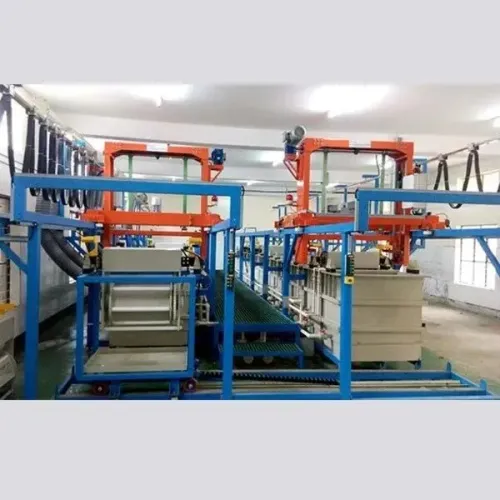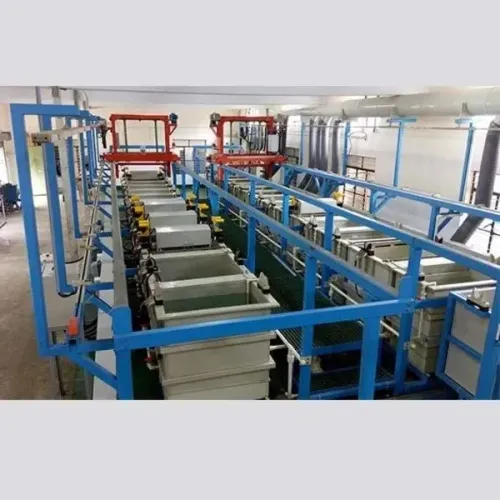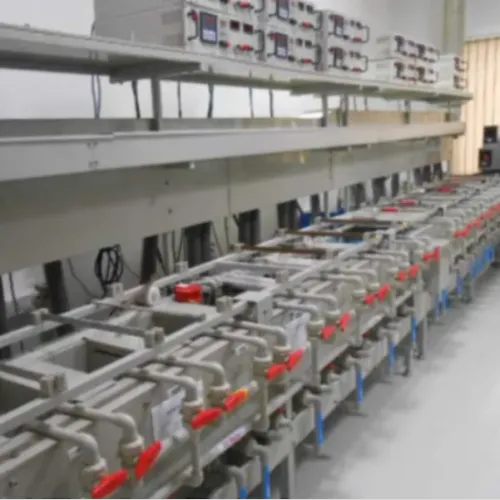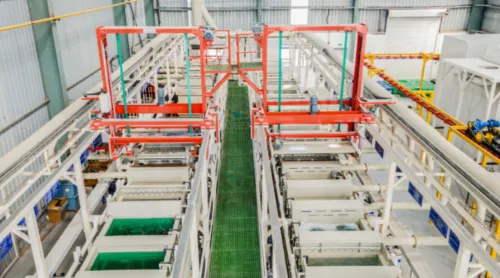
Hard chrome plating is commonly considered for engineering components where surface hardness, wear characteristics, dimensional restoration, or service performance are important. Applications can include shafts, hydraulic components, rollers, dies, mould-related parts, machine elements, and other industrial components exposed to demanding operating conditions.
Unlike decorative finishing, these applications often require greater attention to coating thickness and dimensional control. Consequently, Hard Chrome Plating Equipment needs to be selected around the actual engineering application.
Component Geometry Comes First
Two components with the same weight can require very different plating arrangements.
A long shaft, large roller, small precision part, and complex hydraulic component present different challenges related to current distribution, tank dimensions, fixturing, anode arrangement, and handling.
Before equipment design begins, manufacturers should provide:
- Component drawings
- Maximum dimensions
- Weight
- Surface area
- Areas requiring plating
- Areas requiring masking
- Required deposit thickness
- Batch quantity
- Expected daily production
This information allows the process arrangement to be developed around real production needs.
Why Electrical Capacity Needs Careful Calculation
Hard chrome applications may involve substantial current requirements depending on surface area and process parameters.
Rectifier selection therefore needs more than a rough estimate based on tank dimensions.
The complete electrical path matters, including busbars, contacts, racks, fixtures, cables, and connections. Electrical resistance at poor contact points can affect operating stability and increase unwanted heat generation.
Adequate cooling and ventilation around electrical equipment should also be considered during plant planning.
Tank Size Should Include More Than Component Length
A tank must accommodate the component, but usable operating space also needs to account for fixtures, anodes, clearances, solution movement, and safe loading.
For long or heavy components, material handling can become a major design consideration.
Suitable hoists, lifting arrangements, load capacity, transfer height, and operator access should be reviewed before the equipment layout is finalized.
Fume Control Cannot Be Separated From Process Design
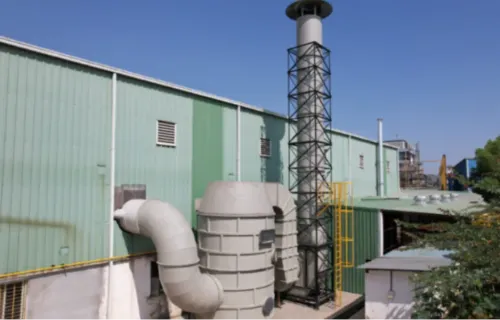
Industrial chrome processes can require effective source extraction and suitable treatment of extracted air.
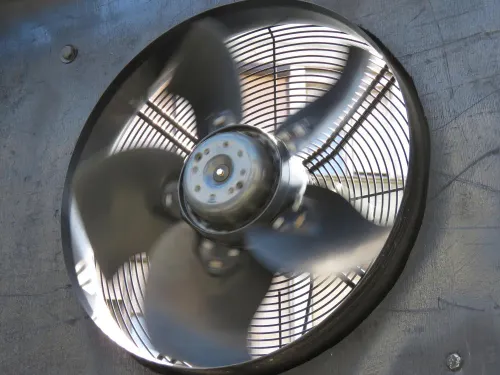
Extraction hoods or slots, ducting, fans, scrubbers, and discharge arrangements should be sized according to the process and line geometry.
Retrofitting extraction after installation can be difficult because crane movement, tank access, structural members, and existing ducts may restrict the available space.
Maintenance Access Protects Long Term Productivity
A line designed only to fit within the smallest possible footprint can create maintenance difficulties.
Pumps, heaters, electrical connections, filters, ducts, valves, and tanks all require inspection or service at some stage.
Providing sensible access can reduce maintenance time and make routine checks easier for plant personnel.
Signs a Manufacturer Is Ready for a Dedicated Line
Investment in Hard Chrome Plating Equipment becomes easier to evaluate when several operational conditions are clear:
- Regular plating volume is available.
- Component specifications are established.
- Outsourced finishing creates scheduling constraints.
- Internal process control has strategic value.
- Factory utilities can support the line.
- Appropriate environmental systems can be incorporated.
- Skilled process supervision is available.
- Production forecasts justify the investment.
A dedicated line should be based on these measurable requirements rather than simply on the desire to move plating in-house.
Planning for Bangalore Industrial Operations
Bangalore and Karnataka support extensive precision engineering, machinery, automotive, aerospace, hydraulic, tooling, and industrial component manufacturing. Hard chrome requirements within these sectors can differ significantly in component dimensions and production volume.
AK Automation Systems works with industrial users evaluating equipment for electroplating and engineered surface finishing applications.
A productive technical discussion should include component drawings, maximum load, coating requirements, expected throughput, factory layout, electrical availability, ventilation requirements, wastewater management, and material handling.
When those inputs are defined early, hard chrome equipment can be configured around production reality. This reduces the risk of purchasing a plant that has sufficient tank volume but lacks the electrical capacity, handling arrangement, environmental controls, or flexibility required for day-to-day manufacturing.
Keywords