Electroplating equipment cannot be selected effectively by tank size alone. Component dimensions, coating specification, production volume, chemistry, material handling, electrical load, ventilation, rinsing, and wastewater management all influence how an Industrial Electroplating Machine should be designed.
This makes equipment selection an engineering decision rather than a simple machinery purchase.
For manufacturers in Bangalore, Karnataka, the challenge is particularly relevant because production environments range from precision engineering and automotive components to electronics, aerospace parts, electrical hardware, and general industrial products.
Start With the Component
The component being plated determines many fundamental equipment requirements.
Buyers should document:
- Base material
- Minimum and maximum component dimensions
- Component weight
- Batch quantity
- Surface area
- Required coating
- Required coating thickness
- Production target per shift
- Rack or barrel processing requirement
Large fabricated components may require substantial tank dimensions and lifting capacity. Small fasteners may be better suited to barrel processing. Delicate components may need rack fixtures that prevent contact damage.
Without accurate component information, equipment can easily be oversized, undersized, or unsuitable for actual production.
Define the Complete Process Sequence
Electroplating involves much more than the deposition tank.
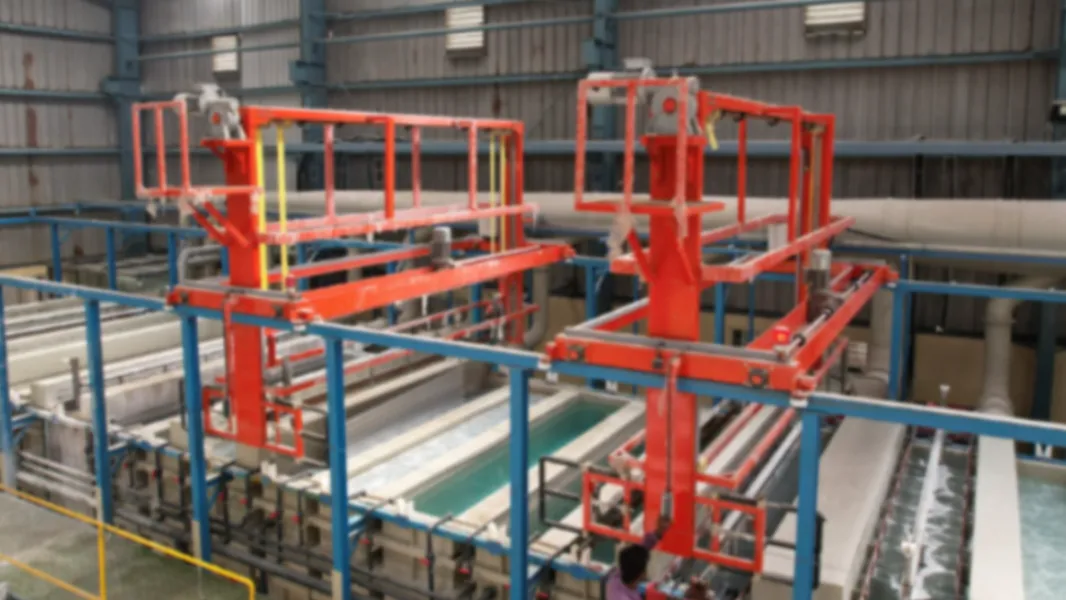
A typical line may require pretreatment, cleaning, rinsing, activation, plating, post-treatment, passivation, final rinsing, and drying. The exact stages vary according to substrate and finish.
Each process stage affects the number of tanks, line length, utility demand, material movement, and cycle time.
A manufacturer planning only around the plating tank may later discover insufficient rinsing capacity, poor material flow, inadequate ventilation, or an unnecessarily complicated operator movement pattern.
Check Rectifier Requirements Carefully
The rectifier supplies controlled DC power to the electroplating process. Its capacity should correspond to the surface area being processed and the current density required by the plating chemistry.
Selecting a rectifier simply because it has a high current rating does not guarantee appropriate performance.
Voltage range, current control, cooling, busbar design, electrical distribution, operating duty, and future load requirements should be evaluated as part of the complete system.
Evaluate Manual, Semi Automatic and Automatic Handling
Production requirements should determine the level of automation.
A manual line may remain practical for low-volume operations with frequent job changes. Semi-automatic arrangements can reduce repetitive handling while retaining process flexibility. Fully automatic systems become more relevant when production volumes, repeatability, and cycle control justify automated material transfer.
The correct question is not whether automation is better. It is whether automation solves a measurable production problem.
Do Not Treat Ventilation as an Add On
Some electroplating processes generate corrosive mist, vapour, or fumes. Appropriate extraction therefore needs to be considered during plant design.
Tank hoods, ducts, extraction fans, scrubbers, make-up air, and discharge arrangements may form part of the overall ventilation strategy.
Designing the production line first and trying to add fume extraction later can result in difficult duct routing and inefficient capture.
Consider Wastewater From the Beginning
Rinsing and chemical processes can generate wastewater containing contaminants that require suitable treatment before reuse or discharge according to applicable requirements.
An industrial plating project should therefore assess expected wastewater volume and characteristics while the production line is being planned.
This allows rinsing strategy, drainage segregation, collection arrangements, and effluent treatment requirements to be coordinated properly.
A Practical Procurement Approach
Before requesting quotations for an Industrial Electroplating Machine, prepare a technical requirement sheet covering components, capacity, chemistry, process sequence, automation level, utilities, ventilation, wastewater, factory dimensions, and expected expansion.
AK Automation Systems supports electroplating equipment requirements for industrial facilities in Bangalore and other Karnataka manufacturing locations. Providing detailed operating information at the enquiry stage enables equipment configuration to be evaluated against real production conditions.
The most suitable plating machine is not necessarily the largest or most automated option. It is the system that matches the component, process chemistry, required output, available infrastructure, environmental controls, and realistic future production needs.
Keywords


