A decorative chrome line and a hard-chrome line are not interchangeable: they use different coating thicknesses, fixturing, current densities, finishing steps and environmental controls. By the end, you will be able to match the line design to the part, choose the right nickel and chromium system, and write a specification that controls appearance, performance, safety and inspection.
Key takeaways
- Use decorative chrome for appearance; use hard chrome for wear, friction and dimensional recovery.
- Change cleaning, activation and pretreatment steps to match steel, aluminium, copper or zinc substrates.
- Specify rack contact, current distribution and masking to control chromium thickness on functional surfaces.
- Set separate controls for hexavalent and trivalent chrome chemistry, emissions and wastewater treatment.
Decorative chrome and hard chrome solve different surface problems
Choose decorative chrome plating for visible parts where brightness, corrosion resistance and a smooth appearance matter more than heavy wear resistance. Choose functional chrome plating, usually hard chrome, for working surfaces that must resist abrasion, reduce friction or restore a controlled dimension.
| Option | What the coating does | When it applies |
|---|---|---|
| Decorative nickel-chrome | Bright or satin nickel provides leveling, reflectivity and most corrosion protection; chromium supplies the thin, tarnish-resistant outer finish. | Automotive trim, fittings, handles and consumer hardware. Chromium is commonly specified in submicrometre-to-low-micrometre coating thickness in micrometres. |
| Functional hard chrome | A much thicker chromium deposit provides hardness, wear resistance and a repairable surface. Its appearance may be dull, cracked or uneven rather than mirror-bright. | Hydraulic rods, rolls, shafts, moulds and sliding or sealing surfaces. Deposits commonly range from about 10 micrometres to several hundred micrometres. |
Do not specify either system as simply “chrome plated.” A decorative specification must name the nickel layers, such as semi-bright, bright and microporous nickel, plus the chromium type, minimum thickness and corrosion test. Direct chrome rarely supplies the leveling needed for a blemish-free appearance.
For hard chrome, define the finished dimension, allowable thickness variation and grinding allowance. Chromium growth is not uniform, and grinding away too much deposit can expose the substrate or open the deposit’s crack network.
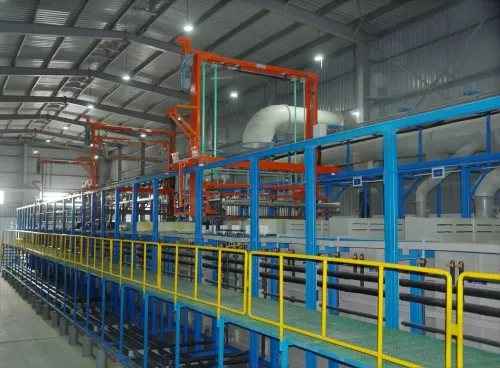
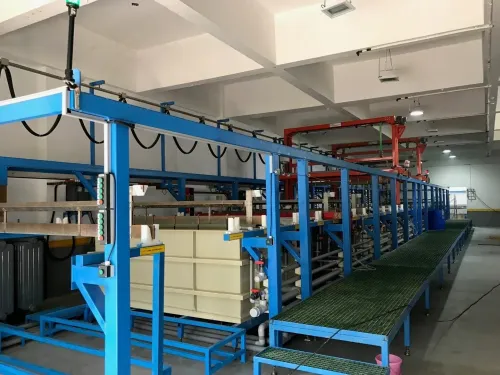
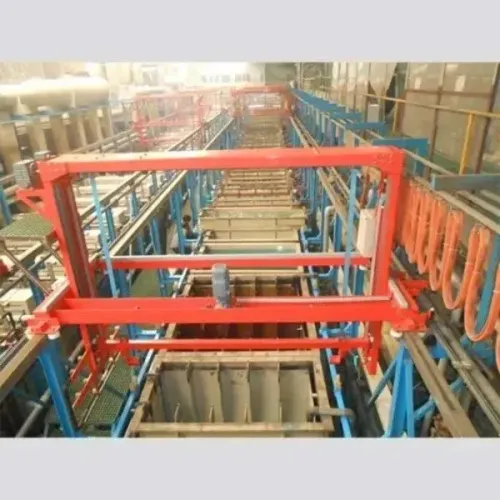
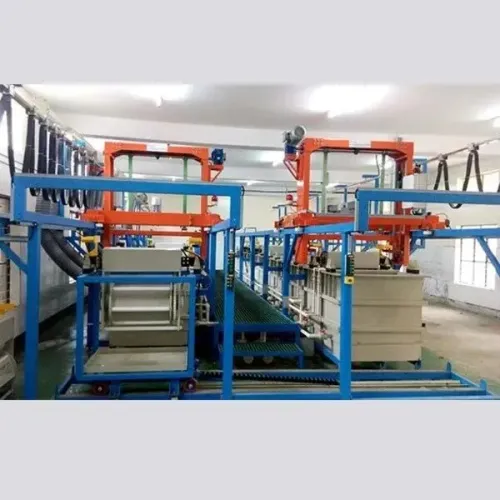
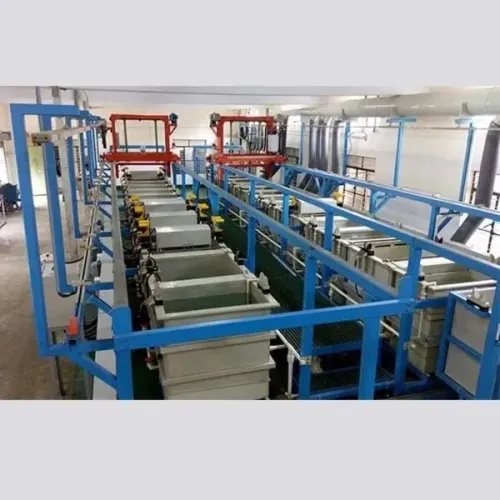
The two choices also need different rectifier capacity, fixturing, masking, bath control and finishing equipment; one generic chrome line will not reliably serve both.
The process sequence changes with the base material
A chromium tank is only one stage in the sequence. Before it, the part passes through cleaning and degreasing, rinsing, electrocleaning where appropriate, another rinse, surface activation and a final rinse. Copper or nickel undercoats follow when the substrate or finish requires them; poor preparation leaves peeling, blistering or bare patches.
| Base material | Preparation before chromium | Important control |
|---|---|---|
| Steel | Remove oil, rust and scale; use alkaline cleaning, electrocleaning and acid activation. Apply nickel or copper when the specification requires a barrier or leveling layer. | High-strength steel needs a hydrogen-embrittlement assessment, controlled acid exposure and a specified post-plate bake and verification method. |
| Stainless steel | Strip passive oxide immediately before plating, then use the approved activation or strike for the alloy. A normal acid dip can leave a surface that will not bond. | Maintain the interval between activation and plating; delay allows repassivation. |
| Aluminium | Clean without attacking the surface, apply a zincate treatment and, where specified, a copper or nickel strike before chromium. | Incomplete zincate coverage causes blistering at edges and pores. |
| Zinc die-cast parts | Remove mould-release residue gently and use a compatible copper build and leveling system. Direct chromium deposition is unsuitable. | Seal pores and inspect for gas-related pits before final plating. |
After chromium, rinse promptly, neutralise or recover drag-out as the process requires, then dry and inspect. Functional hard chrome usually needs grinding or polishing to the finished dimension; define the grinding allowance first, because excessive removal can expose the substrate or open the deposit’s crack network. Racking contacts also need verification before the cycle begins.
Part design and racking determine where chromium actually deposits
Part geometry and rack design decide whether chromium reaches the required thickness or fails at the first inspection. Chrome has poor throwing power, so sharp edges attract excessive current and burn while deep recesses, blind holes and internal bores receive a thin or missed deposit. A specification that ignores current distribution is incomplete.
| Feature or control | Failure mechanism | Design or process response |
|---|---|---|
| Sharp corners and exposed edges | High local current density causes edge burning, roughness and excessive thickness | Add shields or thieves, increase spacing, and reduce the programmed current density |
| Deep recesses, blind holes and internal bores | Low current density leaves thin or absent chromium | Use auxiliary or conforming anodes, orient the opening toward the anode, or create a separate rack recipe |
| Drain holes facing downward | Trapped solution creates staining, corrosion or peeling after rinsing | Place drain holes at the lowest point and angle the part for complete drainage |
| Small or contaminated rack contact points | Contact resistance causes voltage loss, heating and uneven deposition; poor contact can cause peeling | Clean and inspect rack contact points, use sufficient contact area, and verify continuity before plating |
| Close part spacing or rack shadowing | Parts block current and solution flow, producing local thin areas | Set a validated pitch and keep surfaces exposed to the anode |
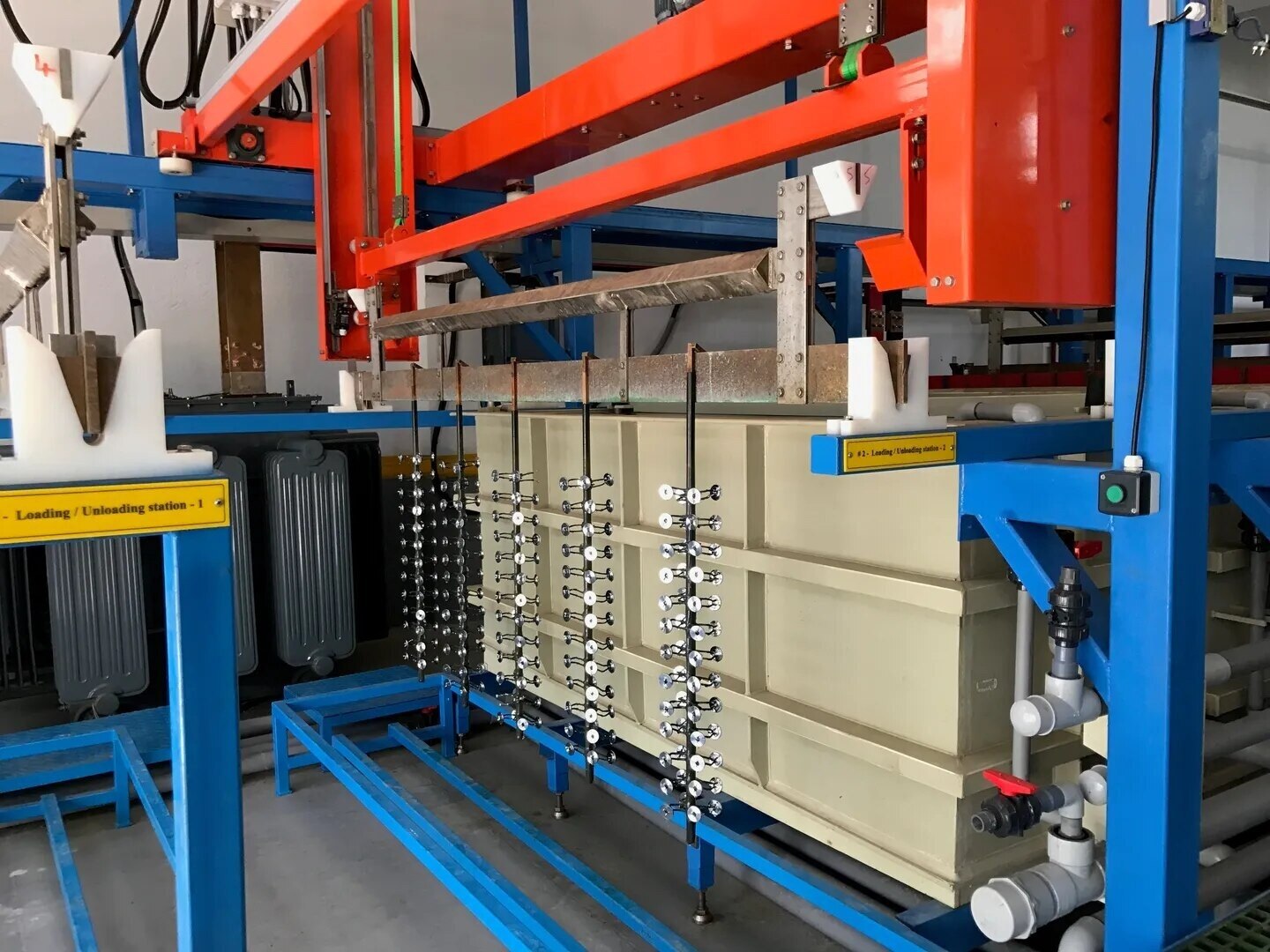
Rack coating condition matters too: damaged insulation exposes unintended metal and changes the current path. Measure rectifier current against the loaded rack, not only the tank setting. Automated lines also need rack identification or recipe control when different geometries share tanks; using the wrong orientation or current profile repeats the defect at production scale.
Hexavalent and trivalent chrome require different line controls
A trivalent bath is not a chemical swap for a hexavalent line. Hexavalent chromium uses chromic acid with a catalyst such as sulfuric acid; cathode efficiency is often only 10–20%, so hydrogen generation and heat make current, temperature and mist control critical.
Trivalent chromium uses proprietary chromium(III) salts, complexants and additives, with tighter impurity limits and supplier-specific dosing.
| Option | Hexavalent chromium | Trivalent chromium |
|---|---|---|
| Bath chemistry | Chromic acid, catalyst ratio, temperature and metal contamination require control. | Chromium(III) salts, complexants, wetters and proprietary additives require tighter recipe control. |
| Finish | Produces the familiar blue-white appearance; qualify thickness and colour on the actual substrate. | Can produce a darker or warmer appearance; match colour against an approved master panel. |
| Worker protection | Use local exhaust ventilation, mist suppression and exposure monitoring. In the United States, OSHA’s limit is 5 µg/m³ over eight hours, with a 2.5 µg/m³ action level. | Reduces hexavalent exposure, but aerosols, acids and additives still require enclosure, ventilation, gloves and documented chemical handling. |
| Wastewater | Segregate rinse streams and reduce Cr(VI) to Cr(III) before precipitation and sludge handling. | Keep complexant-bearing streams separate; they can prevent chromium hydroxide from precipitating. |
| Automation | Control rectifier output, bath temperature, catalyst ratio, mist suppression and rack contacts. | Control additive dosing, impurity alarms, anode operation and recipe-specific current profiles. |
Use counter-current rinsing and drag-out recovery for either process; conductivity and tank-level sensors prevent uncontrolled chemical loss. Identify racks and select recipes automatically when different geometries share tanks, because contact resistance and shadowing change local deposit thickness.
Write the line and part specification around measurable results
A chrome plating specification that says only “chrome plated” cannot predict appearance, service life or fit. For decorative work, name the nickel stack—semi-bright, bright and microporous where required—minimum nickel and chromium thicknesses, chromium type, and a gloss or satin finish measured in gloss units at 60° or against an approved master panel.
Put these acceptance requirements in the purchase document:
- Require a named corrosion test, such as ASTM B117 or ISO 9227, with exposure time, rating method and permitted defects. Check representative parts, not just test coupons.
- Define the coating thickness inspection method, measurement locations and minimum values. X-ray fluorescence suits thin decorative layers; cross-sections or micrometers can verify thicker hard chrome.
- For hard chrome, state the finished dimension, tolerance, required deposit thickness and grinding allowance. Excessive grinding can expose the substrate or open the chromium crack network.
- Identify high-strength or hydrogen-sensitive steels, activation limits, post-plating baking requirements and the verification method, such as ASTM F519 where applicable.
- Specify alkaline cleaning, electrocleaning, activation, rinsing, rectifier capacity, polarity checks, rack-contact resistance, masking and recipe identification—not only the chromium tank.
Ask AK Automation Systems to tie each line station to an acceptance record: bath temperature and chemistry, current and voltage, cycle time, rack identity, rinse quality and wastewater readings. Require calibration certificates, alarm history and traceable batch records; otherwise a passed part cannot prove which conditions produced it.
Related products
 | Nickel and chrome plating plants Nickel and chrome plating plants Electro nickel plating, also known as nickel electro-deposition, is becoming an increasingly popular process for a variety of different manufacturing... View product → |
 | Acid and alkali zinc plating plants Acid and alkali zinc plating plants Zinc Electroplating is one of the most common forms of electroplating and popular because of its relatively low cost, protective nature and... View product → |
Frequently asked questions
What is the difference between decorative chrome and hard chrome plating?
Decorative chrome prioritises brightness, corrosion resistance and a smooth visible finish. Hard chrome, also called functional chrome, prioritises abrasion resistance, lower friction and controlled dimensional restoration.
Why does the process sequence change with the base material?
Steel, aluminium, copper and zinc require different cleaning, activation and pretreatment steps. The sequence must prevent poor adhesion, substrate attack and contamination before chromium deposition.
How do part design and racking affect chrome deposition?
Rack contact, part orientation, anode position, masking and current distribution determine where chromium builds up. Edges and exposed areas can plate thicker while recesses receive less deposit.
What line controls differ between hexavalent and trivalent chrome?
Hexavalent and trivalent chrome use different bath chemistries and require separate operating controls, ventilation, emissions management and wastewater-treatment procedures.
What should a chrome plating line specification measure?
Define measurable results such as chromium thickness, hardness, adhesion, corrosion performance, surface roughness, dimensional tolerance, appearance and production throughput.