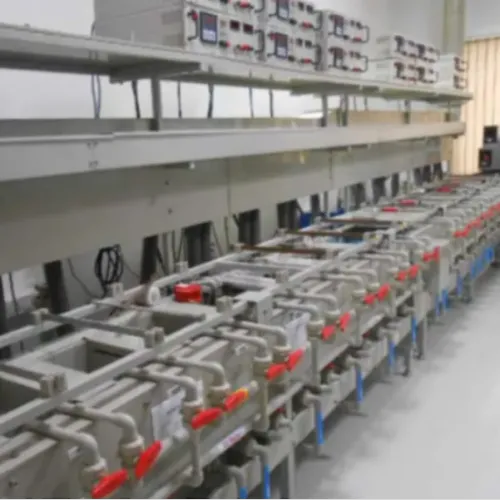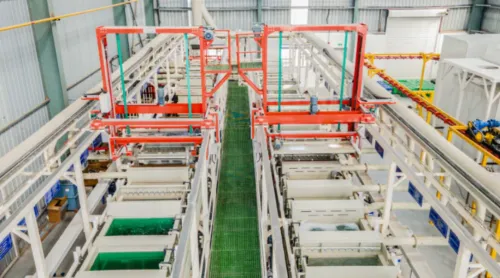
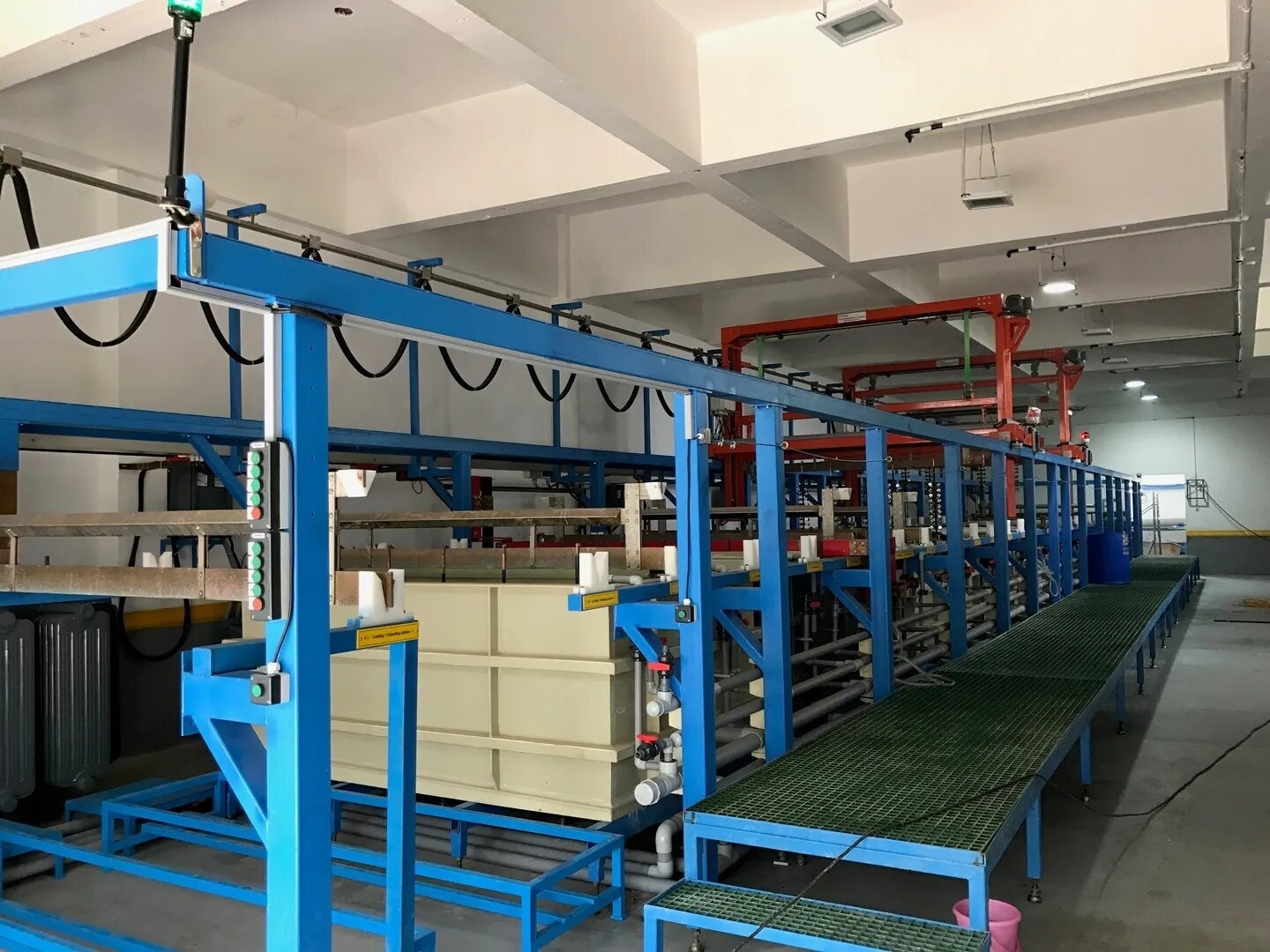
A zinc-plated steel part does not receive a simple yes-or-no level of corrosion protection. You need to match zinc thickness, plating chemistry, pretreatment, passivation, component geometry and inspection criteria to the part’s environment and service demands. By the end, you will be able to define a complete zinc-plating system and compare line options using measurable requirements.
Key takeaways
- Use zinc as both a barrier coating and sacrificial protection for steel.
- Choose acid or alkaline zinc based on geometry, finish and process control needs.
- Define coating thickness, corrosion life, appearance and test methods before ordering the line.
- Validate repeatability with documented process settings and acceptance samples.
How zinc protects steel and how to specify service life
Zinc protects steel in two ways: it forms a physical barrier and acts as a sacrificial anode. If a scratch exposes steel, zinc corrodes preferentially and supplies protection around the small damaged area.
Zinc coating thickness controls how long that reserve lasts, but thickness alone does not define service life; passivation, sealers, part geometry, moisture, salts and abrasion matter just as much.
- Define the exposure and target service life. Record whether the part faces indoor humidity, road salt, marine air, chemicals, abrasion or intermittent wetting. Do not convert a required number of outdoor years directly into salt-spray hours.
- Select a recognised coating class. For ASTM B633 electrodeposited zinc, SC1 requires 5 µm, SC2 8 µm, SC3 12 µm and SC4 25 µm minimum thickness. State the service condition, passivation colour, sealer or topcoat, and any hydrogen-embrittlement controls in the purchase specification.
- Specify the complete coating system: alkaline cleaning, electrocleaning, acid activation, zinc deposition, rinsing, passivation, optional sealing, drying and inspection. Poor cleaning or rinsing can cause bare spots and premature white corrosion despite a passing thickness reading.
- Define acceptance evidence. Combine calibrated thickness measurements, visual limits, adhesion checks and periodic corrosion testing. ASTM B117 or ISO 9227 compares controlled processes; it does not predict field life. State the allowed corrosion product and affected area.
Use ISO 2081 zinc coatings on iron or steel when its coating designation and supplementary-treatment requirements fit the application. Validate X-ray fluorescence readings on the actual substrate, curvature and finish, because passivation and topcoats can distort an apparently precise result.
Choosing acid zinc, alkaline zinc and the right part-handling method
Choose acid chloride zinc for maximum deposition speed and bright appearance on relatively open geometry. Choose alkaline non-cyanide zinc when throwing power and recessed coverage matter more than peak rate. The chemistry must also match dimensional limits and whether parts can survive barrel handling.
| Option | Deposition and finish | Coverage, control and cost |
|---|---|---|
| Acid chloride zinc | Fast deposition; bright appearance | Weaker recessed coverage; productive for high-volume open parts, but edge build can increase rework |
| Acid sulfate zinc | Fast deposition; bright or semi-bright finish | Suitable for robust, accessible shapes; review dimensional variation and bath maintenance cost |
| Alkaline non-cyanide zinc | Slower deposition; finish depends strongly on additives | Better throwing power and recessed coverage; tighter control of caustic, zincate, temperature and organics raises operating effort |
Use rack plating when contact reliability, tight thickness limits or consistent visible finish outweigh fixture cost. Orient the part so holes and recesses face the anodes, and use shields, auxiliary anodes or current thieves to reduce edge buildup. A poor rack contact leaves a bare mark or forces excessive current elsewhere.
Use barrel plating for small, robust components that tolerate tumbling and do not interlock. It lowers handling labour and increases batch throughput, but intermittent contact, part-on-part shielding, entanglement and impact damage reduce control of recessed surfaces.
Specify the chemistry and handling method together; a fast bath cannot recover coverage lost through poor orientation or unstable contact. Include rinsing, passivation and any sealer in the cost comparison, because those stages often determine practical corrosion performance more than a small increase in zinc thickness.
Designing the process sequence around repeatable coating results
A thickness reading can pass while a part still blisters, stains or rusts early. Repeatable results require control of the full sequence, because poor cleaning, uneven current distribution and delayed hydrogen relief create failures that a thickness gauge will not reveal.
1. Run alkaline cleaning at a controlled concentration, temperature and immersion time to remove oil and shop soil. Follow with rinsing and water-break inspection; a continuous water film indicates a clean surface, while beading signals contamination.
2. Use electrocleaning with specified polarity, current density and time. Excessive current can attack edges and leave smut, while weak cleaning leaves residues that cause bare spots or blistering.
3. Control acid activation by acid strength, temperature and exposure time. Rinse immediately after activation. Over-etching, residual smut and an overactive acid dip reduce adhesion before zinc deposition begins.
4. Set zinc concentration, caustic or chloride concentration, temperature, agitation, additive control, current density and plating time within a qualified operating window. Size the rectifier, busbars and contacts for the maximum immersed area, contact loss and future loading.
5. Design racking, shields, auxiliary anodes and current thieves around the part geometry. Edges and tips attract excess zinc; holes, blind recesses and areas near contacts receive less, producing thickness variation even in a correctly analysed bath.
6. Rinse thoroughly after plating, then apply passivation and any sealer before controlled drying. For high-strength steel, specify qualified hydrogen-embrittlement relief at a defined temperature, duration and post-plating delay; baking cannot compensate for excessive acid exposure or plating current.
Record bath analyses, temperatures, current, times and rack loading for each lot, then verify thickness at mapped locations, adhesion and appearance—not thickness alone.
Using passivation, sealers and topcoats without losing the required finish
Choose the post-treatment for the required function, not for colour alone. Trivalent chromate passivation improves corrosion resistance and can produce clear, blue, black or iridescent finishes, while a sealer and topcoat add a barrier that can extend protection beyond passivation alone. The trade-off is a thicker surface film that changes appearance, friction and electrical contact.
Write these controls into the finish specification:
- Passivation chemistry: identify trivalent chromate passivation or hexavalent chromium, rather than stating “chromated”.
- Appearance: define colour, gloss, allowable shade variation and acceptable stains or handling marks.
- Friction: state the coefficient-of-friction range and test method for fasteners or sliding parts; a topcoat can make torque-tension results change.
- Conductivity: define contact resistance or grounding performance after treatment; an insulating sealer can disrupt electrical continuity.
- Rework: state whether stripping and replating are permitted, the maximum cycles and the inspection required afterward.
Do not accept “RoHS compliant” as complete evidence. RoHS restricts hexavalent chromium in homogeneous materials to 0.1% by weight, subject to the directive’s scope and exemptions; request a material declaration that covers the supplied article.
REACH can also trigger duties for substances of very high concern and restrictions under Annex XVII, so obtain the chemical identity of passivation, sealer and topcoat.
Validate the complete finish on the actual part. Check colour, coating thickness, friction, conductivity and corrosion performance after drying, because a salt-spray result from bare passivated panels will not represent a sealed production component.
Turning the requirement into a line specification and acceptance test
Put measurable outputs—not “a complete plant”—into the purchase specification: coating class, parts per hour, electrical load, reject limit and wastewater discharge target.
- Define the complete coating system. State ASTM B633 SC1 (5 µm), SC2 (8 µm), SC3 (12 µm) or SC4 (25 µm), plus passivation, sealer or topcoat and the required appearance.
- Provide the part envelope, rack loading, active surface area, contact points, hourly mix and maximum simultaneous load. Require calculations for rectifier capacity and current density, including contact loss and future loading.
- Set process controls for cleaning, activation, zinc bath analysis, rinse quality, temperature, agitation and drying. Require water-break inspection and an adhesion test suited to the substrate and part geometry.
- Specify wastewater segregation, treatment stages, tank volumes, flow measurement, pH control, alarms, sludge handling and guaranteed outlet concentrations against your consent limits. Ask for chemical consumption and sampling records.
- Require AK Automation Systems, or any bidder, to identify measurement locations, calibration methods, recipes, alarm limits, drawings, manuals and operator training before commissioning.
Accept the line only after a production trial using representative parts and the agreed maximum load. Measure thickness by calibrated X-ray fluorescence thickness measurement at defined points; validate calibration for curvature, substrate, small areas and passivation layers.
Repeat bath analysis, visual inspection, adhesion checks and dimensional checks. Run ASTM B117 and ISO 9227 salt spray only against written hours, interruption rules, sample orientation and failure definitions: white corrosion, red rust and the evaluated surface area. Record bare spots, blistering, stains and thickness variation, then require corrective action before handover.
Related product
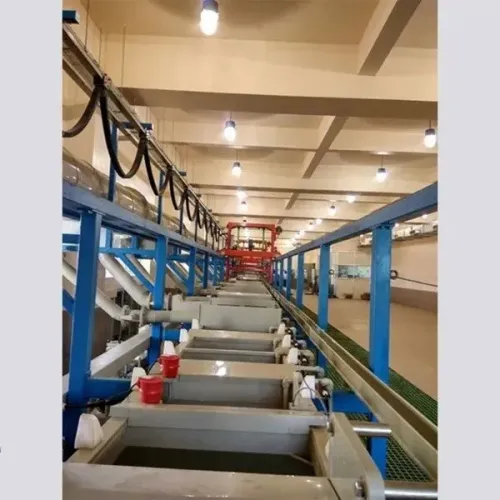
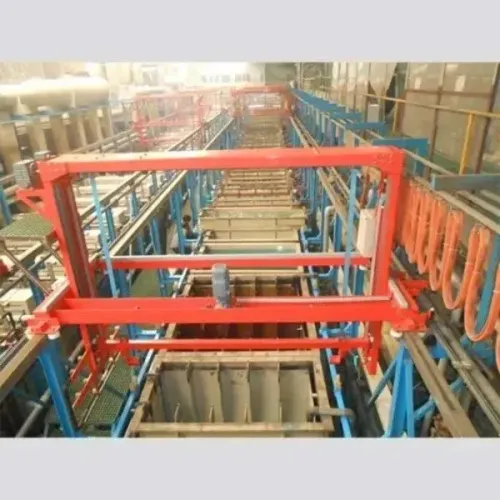
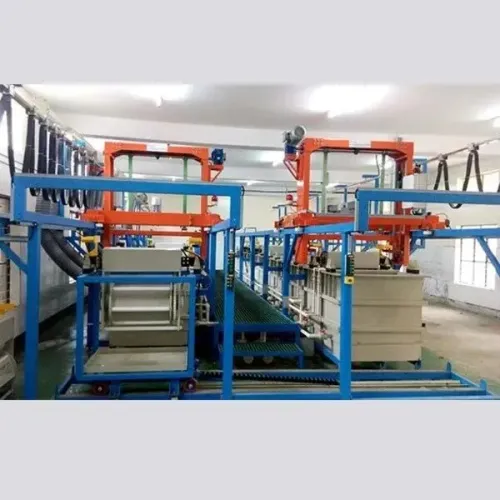
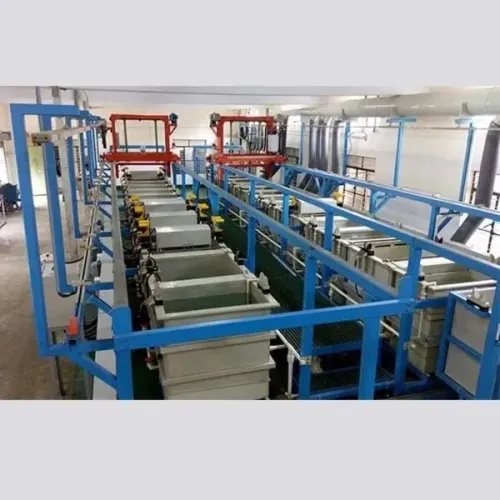
 | Acid and alkali zinc plating plants Acid and alkali zinc plating plants Zinc Electroplating is one of the most common forms of electroplating and popular because of its relatively low cost, protective nature and... View product → |
Frequently asked questions
How does zinc plating protect steel from corrosion?
Zinc forms a physical barrier and corrodes preferentially when damage exposes the underlying steel.
How do you choose between acid zinc and alkaline zinc plating?
Compare part geometry, required appearance, deposit distribution, productivity and the process controls each chemistry demands.
What should a zinc plating line specification include?
Define the process sequence, part-handling method, coating requirements, post-treatments, capacity, controls and acceptance tests.
Why use passivation, sealers or topcoats after zinc plating?
They modify corrosion resistance and appearance, but the specification must preserve the required colour, gloss and finish.