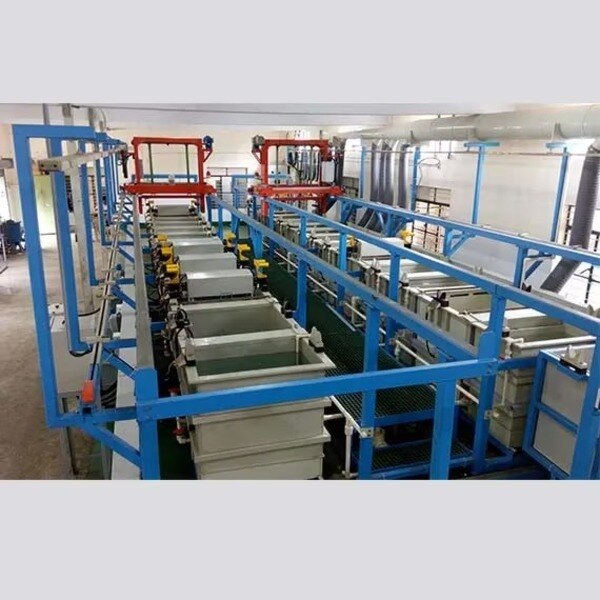
An urgent phosphating-line purchase can lose weeks when the request says only “supply and install” without defining the metal, coating purpose, throughput, chemistry, utilities and acceptance test. By separating process choice from equipment scope, sizing the line from real production data and checking commissioning capability, you can compare Bangalore suppliers on a usable plant rather than a misleading tank count or headline price.
Key takeaways
- Choose iron, zinc or manganese phosphate from the coating and failure you need to prevent.
- Calculate tank volume and conveyor speed from part size, loading method and takt time.
- Demand chemistry, rinsing, materials and effluent treatment in one written specification.
- Put bath control, coating weight, coverage and conveyor performance into acceptance tests.
Choose the Phosphate Process Before You Ask for a Line Price
Iron, zinc or manganese phosphate depends on the metal, the coating that follows and the failure you need to prevent. Phosphating is a chemical-conversion pretreatment, not electroplating: it reacts with steel, zinc or aluminium to create a surface for paint, powder coating, corrosion resistance or lubrication.
Spray suits high-volume, exposed surfaces; immersion reaches recesses and complex geometries more reliably.
| Process | Coating purpose and material | Suitable line configuration |
|---|---|---|
| Iron phosphate | Thin pretreatment for painted steel; improves paint adhesion and basic corrosion resistance | Spray tunnel for high-volume sheet-metal parts, with alkaline cleaning, rinses, phosphate, final rinse and drying |
| Zinc phosphate | Heavier, crystalline base for automotive or industrial paint systems; mainly steel, with chemistry selected for mixed metals | Spray or immersion line; use immersion for cavities, racks or irregular parts and specify activation before phosphating |
| Manganese phosphate | Wear reduction, oil retention and anti-scuff performance on steel components; not a routine paint base | Heated immersion tanks with controlled dwell time, rinsing, drying and oiling rather than a standard paint pretreatment tunnel |
Before asking phosphating line suppliers in Bangalore for a price, freeze these decisions:
- State the part material, largest envelope, mass, loading orientation and rack or barrel method.
- Define the sequence: alkaline cleaning, rinsing, pickling or activation, phosphating, post-rinse, sealing, drying and effluent treatment.
- Compare bath temperature, pH, concentration, free and total acidity, treatment time, spray pressure and final-rinse conductivity.
- Require the quotation to identify tanks, pumps, heaters, exhaust, dosing, PLC/HMI, chemistry support, commissioning and production validation.
Size the Line from Parts, Loading and Takt Time
Give a phosphating line manufacturer in Bangalore the largest part envelope, not an average component, before requesting tank or conveyor dimensions. Include length, width, height, wall openings, part mass, orientation, rack or barrel method, and the number of parts carried per load. Measure the complete rack where the conveyor must provide clearance.
Provide these production inputs:
- Maximum parts per hour, planned shift hours, batch size and required takt time
- The part family mix, including the percentage of small, large and unusually shaped parts
- Loading and unloading time, operator count, and whether parts arrive continuously or in batches
- Required coating system, target production quantity and acceptable reject rate
- Rack pitch, hanger spacing, barrel capacity, or the number of parts per carrier
- Drainage constraints, blind holes, cavities and surfaces that retain solution
The supplier uses immersion or spray time, carrier pitch and takt time to calculate conveyor speed. A line designed for 20-second takt cannot deliver the stated rate if loading takes 35 seconds or carriers return empty. State the peak rate, not only the daily average.
Tank volume must account for working liquid depth, part and rack displacement, freeboard, heating load and the space needed for drainage between stages. Oversized tanks increase chemical use, heating energy, rinse water and effluent; undersized tanks cause poor coverage, carryover and missed throughput.
Demand a layout showing carrier count, line speed, working tank volumes and calculated hourly capacity.
Specify Chemistry, Rinsing, Materials and Effluent as One System
A line that controls only tank temperature is not a controlled process. Specify the chemistry supplier’s limits for pH, free and total acidity, accelerator concentration, temperature, spray pressure or immersion time, and phosphate coating weight, then require automatic dosing, alarms and recorded trend data.
- Name every stage: alkaline cleaning, rinse, pickling or activation, phosphating, post-rinse, sealing and drying. State tank volume, nozzle arrangement, drain time and conveyor dwell time for each stage.
- Decide how mixed loads will run. Require separate processing, masking or validated chemistry for steel, galvanized steel, aluminium and cast iron; one bath cannot be assumed to suit every substrate.
- Specify utilities by capacity: heating load, electrical supply, compressed-air pressure, water flow, exhaust extraction, final-rinse conductivity or resistivity, and the sampling point and method.
- Put the quoted scope in writing: tanks, pumps, heaters, spray headers, conveyor, dosing, PLC/HMI, chemical analysis, operator training, commissioning and production validation.
| Process choice | Material decision | Specification consequence |
|---|---|---|
| Iron phosphate | Painted steel components | Lower coating weight; define cleaning, spray time and paint adhesion target |
| Zinc phosphate | Steel or mixed ferrous loads | Define accelerator control, sludge removal and substrate segregation |
| Manganese phosphate | Wear or sliding steel parts | Define immersion time, coating weight and oiling or sealing step |
Separate concentrated bath dumps from dilute rinses. Include equalization, pH correction, metal precipitation, sludge dewatering and a stated treated-effluent quality in the effluent scope. A phosphating plant supplier near me is useful only if it also provides analysis support, spare parts and documented response during trials.
Check What an Urgent Bangalore Supplier Really Includes
Before awarding an urgent order, match the supplier’s name to a written deliverable list. “Phosphating line suppliers in Bangalore” can mean four different scopes, and a low price often excludes the items that determine your start-up date.
1. A local fabricator supplies tanks, frames, platforms, pipework, pumps or conveyors. Ask for material grades, tank drawings, heating capacity, spray-header design, exhaust connections and floor-loading requirements. Do not assume this supplier owns the chemistry or can commission the process.
2. A chemistry supplier provides the process sequence, chemical products, bath make-up instructions and analysis method. Require limits for pH, free and total acidity, accelerator, temperature, spray or immersion time, rinse quality and coating weight. A chemical recipe alone does not provide PLC logic, tanks, wastewater treatment or production support.
3. An automation integrator supplies the PLC, HMI, sensors, dosing controls, alarms and data records. Confirm who supplies the conveyor, spray and heating hardware, then demand fault-response support during trials. A phosphating line manufacturer in Bangalore that mainly builds electroplating systems must demonstrate conversion-coating experience, not only rectifier expertise.
4. A turnkey supplier owns the interface between chemistry, equipment and site. The quotation must name commissioning personnel, operator training, production validation, spare-parts stock, remote PLC access, chemical-analysis support and response time. A phosphating plant supplier near me is not useful for an urgent launch if nobody can correct dosing, spray, conveyor or heating faults.
Before signing, require a utility and civil survey covering electrical load, water quality, compressed-air dew point, drains, bunding, exhaust, floor loading, chemical access and effluent-plant location. AK Automation Systems can be assessed on this same evidence: scope boundaries, survey documents and acceptance tests, not proximity alone.
Make Phosphating Line Installation Pass Its Acceptance Tests
A failed site survey can delay phosphating line installation more than fabrication. Before equipment arrives, verify electrical load, water flow and quality, compressed-air pressure and dew point, exhaust capacity, drain elevations, floor loading, bunding, maintenance clearances, chemical unloading access and the effluent-treatment-plant location.
1. Complete a dry run. Check conveyor tracking, pump rotation, heater controls, PLC/HMI sequences, guards, level alarms, chemical interlocks and every emergency stop. Record each result.
2. Run water through every stage. Inspect tanks, pumps, spray headers, pipe joints and drains for leaks; confirm spray coverage, drainage, conveyor clearance and emergency-stop response. Correct leaks before adding chemicals.
3. Commission chemistry under controlled conditions. Verify bath temperature, pH, concentration, free and total acidity where specified, dosing accuracy, rinse flow and exhaust performance. Record bath-analysis results and chemical additions.
4. Close the safety file. Test local isolation and lockout points, guarding, ventilation, eyewash and safety shower, spill containment, chemical labels, PPE instructions, alarms and SDS availability. Segregate concentrated dumps from dilute rinses and confirm pH correction, metal precipitation and sludge handling in the effluent system.
5. Run representative production parts at the contracted loading, line speed and takt time. Accept the plant only after documented coating weight or surface coverage, appearance, paint adhesion, corrosion testing where specified, stable bath records and achieved throughput meet the signed criteria.
Attach calibration records, operator training confirmation, punch-list closure and as-built drawings to the acceptance certificate.
Frequently asked questions
How do you choose between iron, zinc and manganese phosphating?
Choose iron phosphate for paint pretreatment when a thin conversion layer is sufficient, zinc phosphate for stronger corrosion protection beneath paint, and manganese phosphate for wear, oil retention and sliding components. Match the process to the base metal, final coating and failure mode.
How should you size a phosphating line for urgent plant requirements?
Calculate required conveyor speed from takt time, parts per hanger, loading and unloading time. Size each stage from part envelope, solution volume, drain time and the contact time required by the selected chemistry.
What should a phosphating line specification include?
Write down the chemical stages, operating temperatures, contact times, tank materials, heating method, rinse-water quality, spray or immersion arrangement, ventilation, sludge handling and effluent-treatment scope.
What should a phosphating line installation acceptance test cover?
Test conveyor speed, tank temperature, bath concentration, pH, rinse quality, chemical coverage, coating weight, drying performance and repeatability using production parts. Record results against agreed limits before handover.
Keywords