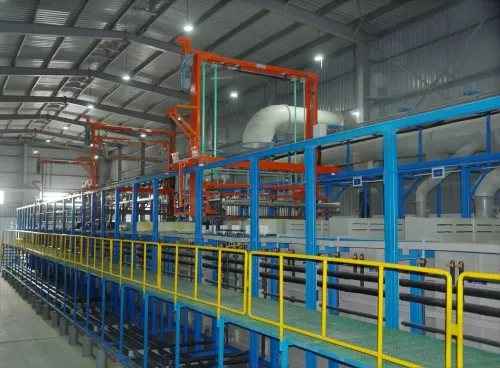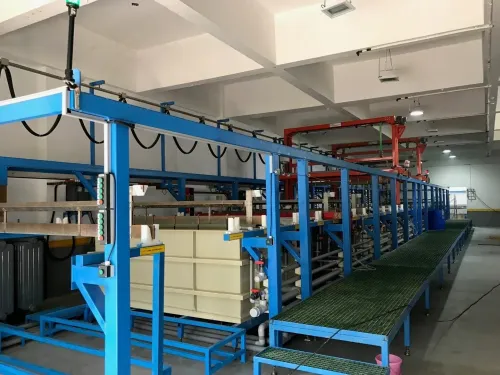
Wastewater from a plating line changes character at every tank: degreasing adds oils and surfactants, pickling adds acids and iron, plating adds dissolved metals, and passivation or chromating can add hexavalent chromium. By the end, you should be able to map each waste stream, specify compatible treatment stages, and identify the measurements needed to operate the plant safely and consistently.
Key takeaways
- Map every rinse, carryover and drain before sizing treatment equipment.
- Keep equalisation, ETP treatment and the complete effluent plant distinct.
- Route metals, acids, alkalis, oils and suspended solids by contaminant.
- Give hexavalent chromium and cyanide separate hazardous-stream treatment.
Map every wastewater source before choosing treatment equipment
Map every drain before selecting tanks, pumps or treatment stages: plating line wastewater arises at each carryover and rinse point, not only at the plating tank.
- Rinsing after degreasing removes alkaline cleaners, oils and surfactants.
- Pickling and activation rinses during electroplating processes carry acids, dissolved iron and other metals.
- Plating rinses contain nickel, copper, zinc, chromium, cyanide or other bath chemicals.
- Passivation and chromating rinses can contain chromium compounds and oxidising chemistry.
- Phosphating rinses carry phosphate, metals, acidity and suspended solids.
- Floor-wash water, filter backwash, spent baths, leaks and equipment-cleaning water add intermittent contaminant loads.
- Drag-out from concentrated process baths deserves its own collection point for recovery or controlled treatment.
| Stream | Keep separate from | Why |
|---|---|---|
| Cyanide-bearing rinse | Acids, hypochlorite and other oxidants | Acidification can release hydrogen cyanide; incompatible mixing can generate toxic gases. |
| Hexavalent-chromium rinse | Cyanide, organic cleaners and general metal rinses | Cr(VI) reduction needs a controlled dedicated stage before metal precipitation. |
| Concentrated drag-out or spent bath | Dilute rinses | It can overload equalisation and may justify chemical recovery. |
| Acidic pickling or activation rinse | Alkaline degreasing and cyanide streams | Mixing changes pH violently and can release hazardous gases. |
| Oily alkaline cleaner | Clean metal rinses | Oil and surfactants foul clarification, membranes and downstream treatment. |
| Compatible metal-bearing rinses | Cyanide and Cr(VI) streams | Combine them only after chemistry and treatment compatibility are verified. |
Separate equalisation, ETP treatment and the complete effluent plant
A collection tank receives wastewater; a wastewater equalisation system controls its flow and concentration; an ETP removes contaminants; the complete effluent treatment plant includes all four functions plus sludge handling, monitoring and discharge equipment.
Keep incompatible streams in separate collection tanks. Cyanide-bearing wastewater must not meet acid, and acidic wastewater must not mix with hypochlorite or another oxidant, because those combinations can release hydrogen cyanide or chlorine-containing gases.
1. Collect rinsewater and concentrated process discharges in segregated tanks. Provide tank agitation, level measurement and bunding so settled solids do not create an unexpected slug.
2. Equalise compatible wastewater in a wastewater equalisation system. Mixing and controlled pumping prevent a high-metal batch or sudden pH change from overwhelming downstream treatment; equalisation does not remove contamination.
3. Send cyanide wastewater through a dedicated oxidation stage using a validated alkaline-chlorination, ozone or peroxide process. Cyanide destruction is not metal removal, so follow it with precipitation and solids separation.
4. Reduce hexavalent chromium to trivalent chromium before hydroxide precipitation. For other metal-bearing streams, adjust pH by treatment stage and chemistry; excessive alkalinity can redissolve amphoteric metals such as zinc, lead, chromium and aluminium.
5. Add coagulant or flocculant, then clarify and filter the precipitated solids. Route clarified water to polishing, reuse or discharge according to the actual sewer, receiving-water or internal-reuse limit.
6. Dewater, label, store and dispose of treatment sludge under applicable waste rules. Industrial origin alone does not prove that sludge is non-hazardous; classification can require process knowledge or testing such as TCLP.
Match each contaminant to its treatment route
Do not send every contaminant through one precipitation tank. Match the chemistry to the reaction required, then verify both dissolved and total-metal results against the applicable discharge limit.
- Nickel and other dissolved metals: raise pH in controlled stages and precipitate metal hydroxides, followed by clarification and filtration. Nickel wastewater treatment needs extra attention when EDTA, citrate, ammonia or plating additives keep nickel soluble; use complex-breaking, sulfide precipitation, adsorption, ion exchange or membranes when jar tests confirm the need.
- Chromium: reduce hexavalent chromium to trivalent chromium before hydroxide precipitation. Trivalent chromium then follows chromium wastewater treatment through pH-controlled precipitation and solids separation.
- Zinc, copper and iron: design zinc removal and copper and iron removal around metal-specific pH ranges. Excess caustic can redissolve amphoteric zinc, chromium or aluminium as soluble hydroxo complexes.
- Acids and alkalis: neutralise acidic and alkaline streams in separate, controlled dosing stages; uncontrolled mixing creates heat, splashing and poor pH control.
- Cyanide: oxidise cyanide with alkaline chlorination, ozone or hydrogen peroxide, then remove the liberated metals separately.
- Fluoride: precipitate it with calcium, aluminium or another validated reagent, then clarify and filter.
- Phosphate: use iron, aluminium or calcium precipitation and remove the resulting solids.
- Oils and surfactants: separate free oil first; use coagulation, flotation, adsorption or biological treatment for emulsified oil and persistent surfactants.
- Suspended solids: use coagulation, flocculation, clarification and filtration before membranes.
- Dissolved salts: use reverse osmosis, ion exchange or evaporation only with a plan for concentrate, regenerant or residue disposal.
Treat hexavalent chromium and cyanide as dedicated hazardous streams
Acidifying cyanide wastewater can release hydrogen cyanide gas, while mixing acidic waste with hypochlorite can generate chlorine-containing gases. Keep cyanide, hexavalent-chromium, concentrated drag-out and compatible metal rinses in identified, isolated collection systems; equalisation reduces flow peaks but does not make incompatible streams safe to mix.
1. Route cyanide wastewater to a dedicated tank with a closed transfer path, local exhaust ventilation, pH monitoring and high/low-level interlocks. Keep acids and oxidants physically separated until the approved destruction stage. Use cyanide-compatible pumps, labelled lines, spill containment and gas detection where a release could expose workers.
2. Perform cyanide destruction as its own oxidation process. Alkaline chlorination, ozone or hydrogen peroxide can convert cyanide into less toxic oxidation products, but the metals remain in the liquid. Send the treated stream through separate precipitation, clarification and filtration stages.
3. Send Cr(VI) to a dedicated reduction tank for hexavalent chromium reduction under acidic conditions, commonly pH 2–3. Then raise the pH in a separate stage for trivalent chromium precipitation; one neutralisation tank cannot reliably control both reactions as loading changes.
4. Control each stage with calibrated pH and ORP instruments, representative sampling and laboratory checks for cyanide, Cr(VI) and individual metals. Add hardwired dosing limits, mixer operation interlocks and a safe diversion route for out-of-specification effluent. A single ORP reading does not prove complete cyanide destruction or chromium reduction.
Set operating targets from wastewater data, not a universal recipe
Do not set one pH target for every treatment tank. Metal hydroxides have metal-specific optima, and excessive alkalinity can redissolve zinc, lead, chromium or aluminium as soluble hydroxo complexes.
Require these inputs before selecting or upgrading equipment:
- A flow meter on every wastewater source, with peak and average flow records, batch timing and rinse-flow data.
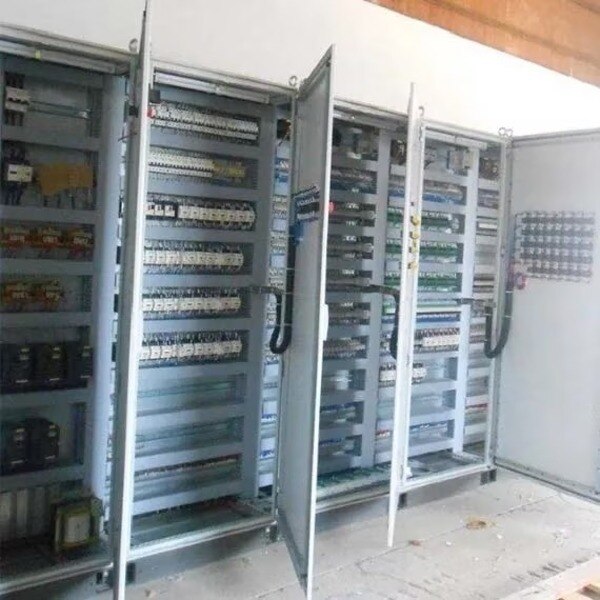
- Online pH control, ORP, conductivity and level signals, with probe locations, calibration records, alarm limits, dosing interlocks and a representative sampling point.
- A laboratory testing programme using both grab and flow-weighted composite samples. Require metal analysis for nickel, chromium, zinc, copper, iron and aluminium, plus separate results for Cr(VI), total cyanide, free cyanide, fluoride, phosphate, oil, suspended solids, COD and total dissolved solids.
- A process flow diagram, piping and instrumentation diagram, hydraulic profile, chemical mass balance, equipment datasheets, control narrative and sludge estimate.
- The discharge permit or sewer acceptance limits for the actual route. Direct discharge, municipal sewer discharge and internal reuse are different design cases.
Use online readings to control a process, not to prove compliance. ORP responds to several oxidising and reducing chemicals and can mislead you when mixing is poor or the electrode is fouled.
| Evidence | What it decides | Failure if missing |
|---|---|---|
| Lab results | Treatment stages and chemical doses | Poor removal or excess chemical use |
| Flow and peak data | Tank volume, pumps and clarifiers | Hydraulic overflow |
| P&ID and interlocks | Safe segregation of cyanide and Cr(VI) | Toxic gas or incorrect dosing |
For an upgrade, ask AK Automation Systems to reconcile the P&ID, mass balance and laboratory results before sizing new tanks or dosing systems.
Frequently asked questions
Where does plating line wastewater come from?
It comes from rinse tanks, drag-out and carryover, equipment washing, floor drains, filter cleaning and chemical-bath maintenance—not only from plating tanks.
What is the difference between equalisation, ETP treatment and a complete effluent plant?
Equalisation balances flow and pollutant concentration; ETP treatment removes contaminants through processes such as reduction, precipitation and filtration; the complete plant also includes collection, pumping, sludge handling, monitoring and discharge controls.
How do you choose a treatment route for plating wastewater contaminants?
Test the wastewater, then match each contaminant to its route: metals to chemical precipitation and filtration, acids and alkalis to pH correction, oils to separation, and suspended solids to clarification or filtration.
Why need hexavalent chromium and cyanide dedicated treatment?
Hexavalent chromium requires reduction before precipitation, while cyanide requires controlled oxidation; segregating these hazardous streams prevents incompatible chemistry and improves treatment control.
How should you set ETP operating targets?
Use flow, pH, contaminant concentrations, batch chemistry and discharge limits from representative wastewater samples instead of applying a universal recipe.