Choosing a hard chrome plating machine requires more than matching tank size to component size. You need to connect the coating specification, rectifier capacity, current distribution, masking, hydrogen control, ventilation and post-plating finishing to the part’s actual service conditions.
Key takeaways
- Separate functional hard chrome from decorative chrome before selecting equipment.
- State final coating thickness, machining allowance, fit and surface finish on the drawing.
- Size the rectifier for required current and current density, not tank volume.
- Demand test records proving uniform thickness, adhesion and finish across the component.
Hard Chrome or Decorative Chrome: Which Process Fits the Component?
Hard chrome plating deposits chromium metal to build a functional chrome coating, not merely to improve appearance. Engineering deposits commonly range from about 25 to 250 µm, and the drawing must state whether that figure is the final thickness or the allowance before grinding or honing.
Hard chrome and decorative chrome solve different problems:
| Process | Main purpose | Typical construction and use |
|---|---|---|
| Hard chrome plating | Resist wear, friction and corrosion; restore dimensions | Thick chromium deposit on the working surface, often without a nickel underlayer; hydraulic piston rods, shafts, rolls, bores, dies and bearing seats |
| Decorative chrome | Provide brightness, colour and surface protection | Thin chrome over nickel, with the nickel providing much of the corrosion barrier; trim, fittings and visible hardware |
Conventional hard chrome is normally a hexavalent-chromium process. Decorative chrome may use trivalent chromium, so a line designed for one chemistry cannot automatically run the other; tanks, anodes, rectifier settings, ventilation and wastewater treatment may all differ.
Choose hard chrome when the component faces sliding wear, abrasion, repeated contact or dimensional refurbishment. Plan the process through final grinding: uncontrolled coolant, grinding burn, torn chrome or edge breakout can ruin an otherwise acceptable deposit.
Use another treatment when fatigue strength and hydrogen-embrittlement limits dominate, current distribution is poor around the geometry, or the duty favours HVOF tungsten carbide, electroless nickel, nitriding or thermal spray. A coating that is hard is not automatically the right coating.
Specify Thickness, Fit and Surface Finish Before Buying the Machine
Put the final functional size and coating allowance on the drawing before selecting a plating machine. State whether the specified chrome plating thickness is the deposit left in service or the amount applied before grinding or honing; a 100 µm applied layer may leave only 40–60 µm after finishing.
| Drawing callout | What to specify | Why it changes the process |
|---|---|---|
| Part geometry | Plated faces, masked areas, holes, edges, datums and racking points | Current distribution controls deposit uniformity and edge buildup |
| Size requirement | Finished dimension, dimensional tolerance and stock allowance for grinding | The line must deposit enough material without making final correction impossible |
| Surface requirement | Surface roughness before plating and after grinding, plus edge-break limits | Oil, oxide and grinding burn can cause blistering; torn chrome or edge breakout can ruin a sound deposit |
| Service requirement | Wear load, contact medium, temperature, corrosion exposure and fatigue limits | Deposit thickness, crack-density limits and post-treatment depend on the working environment |
| Inspection requirement | Gauge method, measurement locations, cross-section or coupon criteria | Magnetic measurement suits ferromagnetic substrates; eddy-current methods suit nonferrous configurations |
Specify the substrate grade and its pre-treatment condition. Residual oil, smut, passive oxide and grinding burn must be removed through controlled cleaning, rinsing and activation; a final thickness reading cannot reveal poor adhesion created before the tank.
State the chemistry explicitly: conventional hexavalent hard chrome is not interchangeable with trivalent decorative chrome. Require the process specification to identify masking, anode arrangement, transfer time and the grinding method, including coolant filtration and burn prevention.
Size the Rectifier and Process Equipment Around Current, Not Tank Volume
A 2 dm² active surface plated at 40 A/dm² requires 80 A at the workpiece. Calculate every exposed cathodic surface, including multiple parts in one load, then size the hard chrome rectifier for the maximum simultaneous current rather than the plating tank volume.
1. Convert the drawing into electrical load: multiply active area in dm² by the specified current density. Conventional hard chrome commonly uses about 20–60 A/dm², so a 10 dm² load can demand 200–600 A. Specify continuous output, voltage range, polarity control and suitable busbars, contacts and switches for that peak load.
2. Account for low cathode efficiency. Hexavalent hard chrome commonly deposits at only about 10–20% cathode current efficiency; the remaining energy drives hydrogen evolution and heats the bath. A longer cycle does not remove this heat load, so size the cooler, heat exchanger, circulation and ventilation from electrical input and operating duty.
3. Configure the work zone for current distribution. Anode assemblies, spacing, shields, auxiliary anodes and part rotation determine whether edges burn while recesses remain thin. The tank must provide the immersion depth and clearance needed for those arrangements, not merely hold the required liquid volume.
Ask for a heat-load calculation at the maximum load, including rectifier losses and bath operating temperature. The installation also needs hydrogen capture and chromium-mist control suited to the process and local rules; a larger tank without these systems only creates a larger unsafe heat and emissions problem.
Control Geometry, Chemistry and Inspection Across the Full Plating Cycle
A sound process controls the part, bath and electrical field together. Poor current distribution leaves thin recesses and oversized edges, while uncontrolled heat, chemistry or contact resistance causes peeling, pits and dimensional loss.
1. Load each part against fixed datums and verify contact before immersion. Record rack orientation, masking fixtures, anode type, anode-to-cathode spacing, shields, thieves and auxiliary anodes; these features balance current distribution around edges, bores and shoulders.
2. Prepare the surface through degreasing, rinsing, activation and immediate transfer to the plating tank. Any oil film, oxide or delay after activation can produce poor adhesion even when the final thickness is correct.
3. Use a recipe that records part identification, ramp current, dwell current, immersion time, bath temperature, agitation and alarm limits. A PLC cannot correct depleted catalyst, incorrect chromic-acid concentration or excessive contamination, so analyse the bath and log additions against defined limits.
4. Size cooling for the low cathode efficiency of conventional hexavalent chrome, commonly about 10–20%. Hydrogen evolution and wasted electrical energy become heat; maintain the specified temperature instead of allowing the rectifier to overheat the bath.
5. Install tank-level chrome mist ventilation with covers, local exhaust and mist treatment. General room airflow does not capture emissions at the tank, and hydrogen management must prevent accumulation near the plating line.
6. Inspect appearance, thickness, dimensions and adhesion after plating, then grind with filtered coolant and controlled stock removal. Check for grinding burn, torn chrome and edge breakout; relieve hydrogen embrittlement when the material and governing specification require it.
Keep hexavalent and trivalent chemistries separate in equipment design. Tanks, anodes, rectifier settings, ventilation, wastewater treatment and controls for one process cannot be transferred to the other without engineering review.
Use a Machine Specification That Proves Repeatable Component Results
Require the machine builder and installer to define performance in measurable terms, not “automatic” or “high capacity.” The acceptance protocol must use a named component or representative coupon, record current density, bath temperature, cycle time and final thickness, then repeat the run to prove consistency.
- A rectifier, busbars, contacts and cooling system rated for the stated surface area and 20–60 A/dm² operating range.
- Process monitoring that logs rectifier output, bath temperature, plating time, level, agitation and alarm history for every batch.
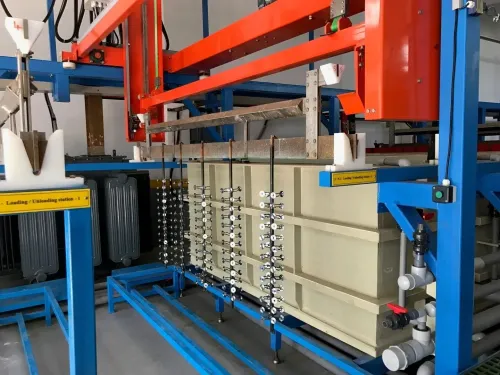
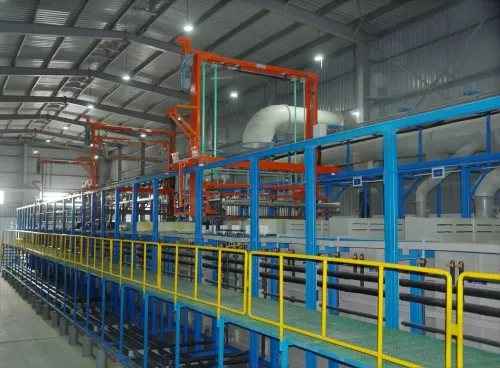
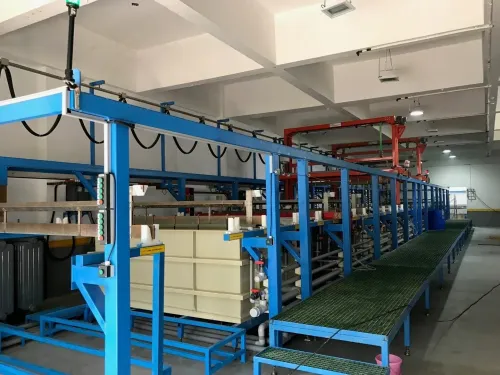
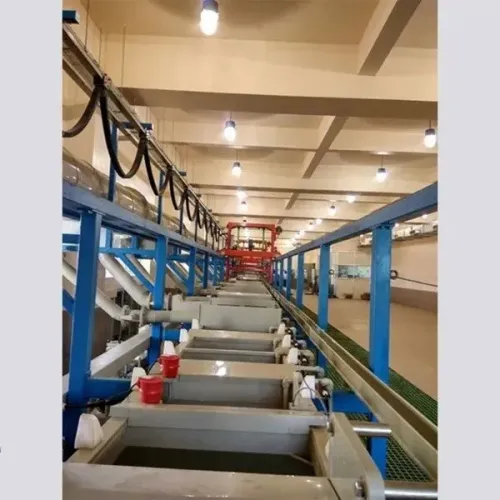
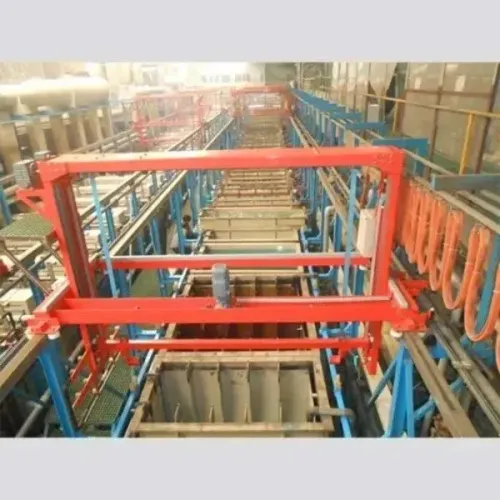
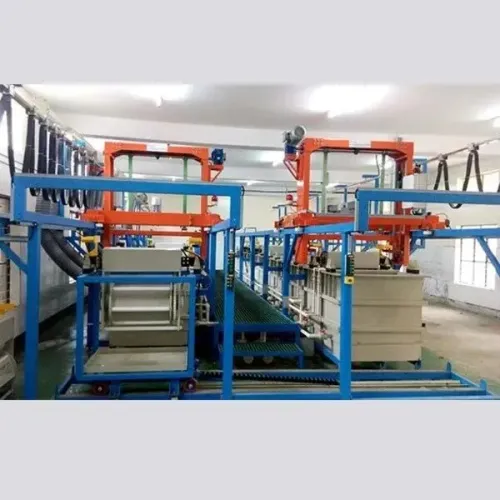
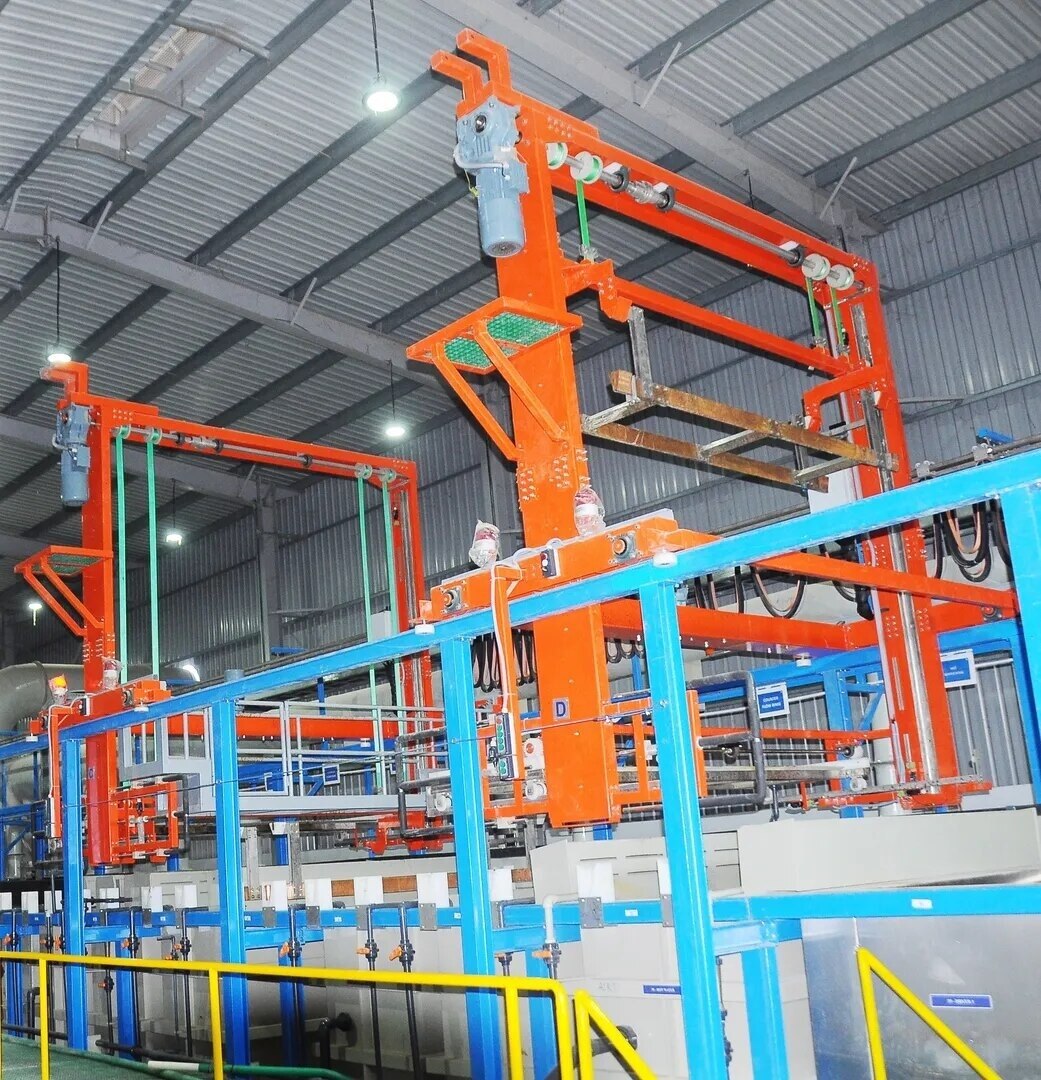
- An automated plating line sequence showing loading, pre-treatment, rinsing, plating, recovery and unloading, with recipes protected from unauthorised changes.
- A thickness and adhesion inspection plan using a validated method: magnetic measurement on ferromagnetic steel, eddy current on suitable nonferrous substrates, and cross-sections or coupons for critical work.
Specify whether the hard chrome plating plant uses hexavalent chemistry. Do not accept a claim that equipment supports trivalent chrome without a documented redesign covering tanks, anodes, rectifier settings, ventilation, wastewater treatment and controls.
For U.S. installations, require the compliance basis for EPA NESHAP controls, including mist suppression, tank enclosure or capture, and emission monitoring. Ask for airflow measurements and commissioning records.
Make post-plating grinding part of the scope when the drawing requires it. Demand datum control, grinding allowance, coolant filtration and a low-damage procedure that prevents burn, torn chrome and edge breakout. AK Automation Systems should provide these interfaces and repeatability records in its proposal, not leave them to a separate contractor.
Frequently asked questions
What is the difference between hard chrome and decorative chrome plating?
Hard chrome builds a functional chromium deposit for wear resistance, dimensional recovery or corrosion protection. Decorative chrome uses a thin chromium finish over nickel to improve appearance and surface durability.
What must you specify before buying a hard chrome plating machine?
Specify the component material, plated area, final thickness or machining allowance, dimensional tolerances, masking zones, surface finish and post-plating grinding or honing requirements.
How do you size a hard chrome plating rectifier?
Calculate the plated surface area and required current density, then size the rectifier for the resulting current with suitable voltage, control range and duty cycle. Tank volume does not determine the required amperage.
How can you verify repeatable hard chrome plating results?
Require documented controls for cleaning, activation, bath chemistry, temperature, current density, agitation and plating time, plus thickness, adhesion, hardness and surface-finish inspection records.