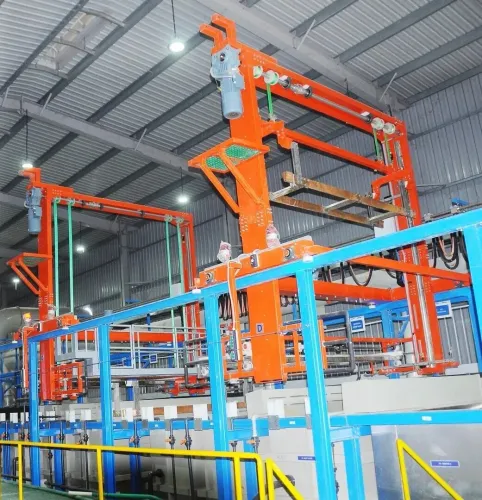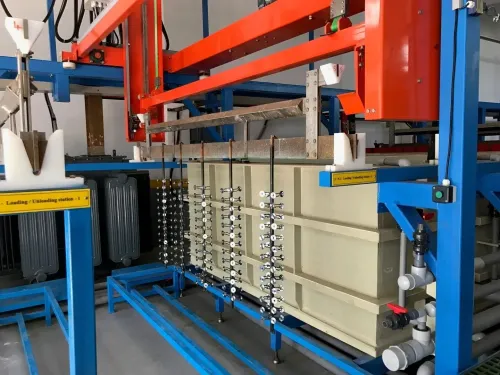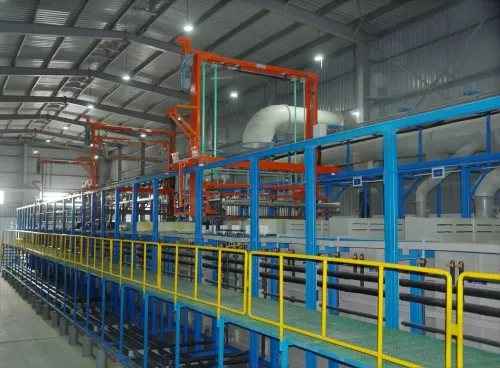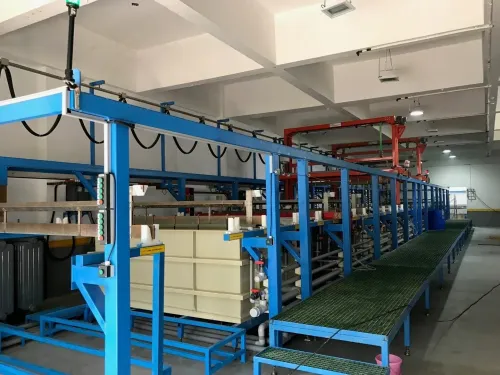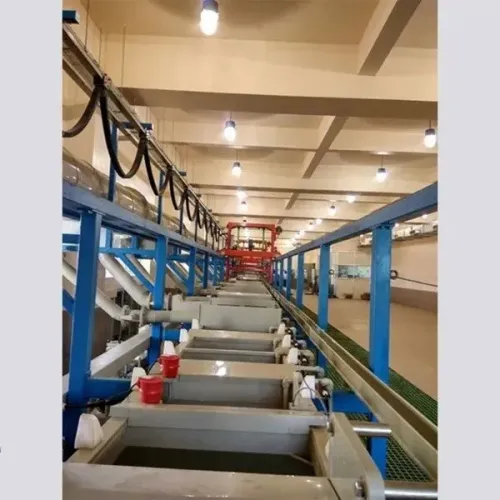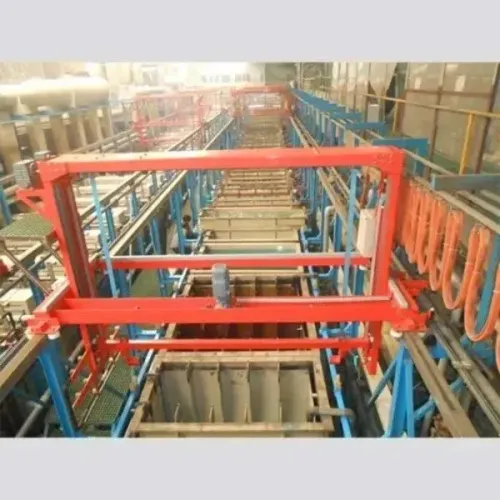
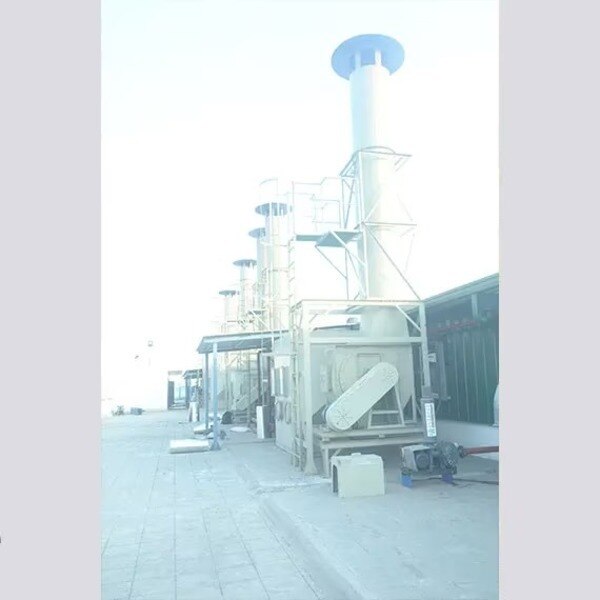
Open plating tanks release different hazards, and a fan above the line cannot guarantee that operators are protected. By the end, you will be able to map each fume source, match contaminants to capture and scrubbing equipment, specify the air path, and verify performance after commissioning.
Key takeaways
- Capture fumes at each tank before they reach the operator’s breathing zone.
- Inventory acid mist, alkaline mist, solvent vapour and hydrogen tank by tank.
- Choose scrubber media for the contaminant, not simply the process name.
- Commission with airflow, pressure, emissions and interlock tests recorded.
Start at the Tank: Source Capture Versus Room Ventilation
Capture fumes at the tank opening with source capture, before the plume reaches the operator’s breathing zone. Local exhaust ventilation removes contaminated air at its point of release; general-area ventilation only dilutes contaminants after they have entered the room.
An overhead hood is not equivalent to a slot hood or push-pull system because cross-drafts, tank width and hood distance can carry mist sideways before the hood captures it.
| Method | How it captures | Main failure |
|---|---|---|
| Overhead hood | Draws rising fumes upward | Misses emissions deflected by cross-drafts |
| Slot hood | Pulls air through a slot along the tank edge | Loses effectiveness when the slot is poorly positioned or obstructed |
| Push-pull system | A controlled air jet drives emissions toward an exhaust slot | Misaligned push air can drive contaminants into the breathing zone |
| General-area ventilation | Dilutes room contamination with replacement air | Does not prevent a worker from inhaling the plume at the tank |
For wide or continuously operated tanks, a push-pull system can reduce required exhaust airflow, but verify the air-jet direction under production conditions. Measure capture at the tank opening, not only transport velocity inside the duct; good duct velocity cannot compensate for poor hood geometry.
Hexavalent-chromium operations require particular control: OSHA’s 8-hour permissible exposure limit is 5 micrograms per cubic metre, with a 2.5-microgram action level. Fume suppressants reduce chromic-acid mist but do not replace extraction or exposure testing. Provide make-up air without cross-drafts, or negative pressure will alter capture and make doors difficult to operate.
Build a Tank-by-Tank Fume and Hydrogen Inventory
Start with the tank, because a scrubber cannot correct an unidentified source. Record normal and worst-case conditions for every station, including loading, unloading, heating, agitation, air sparging and electroplating current.
| Station | Expected contaminants | Record for the inventory |
|---|---|---|
| Hydrochloric acid pickling | Hydrogen chloride, acid mist, hydrogen if electrically assisted | Acid name and concentration, temperature, tank dimensions, hood airflow and operating time |
| Sulfuric acid anodizing | Sulfuric acid mist, hydrogen and oxygen from electrolysis | Acid concentration, temperature, current, gas-evolution rate, hood type and measured capture airflow |
| Chromic acid plating | Chromic acid aerosol, hexavalent chromium and hydrogen | Chromium concentration, current density, tank temperature, suppressant or floating-ball blanket, hood airflow and exposure results |
| Nickel baths | Nickel-containing mist, acid or alkaline mist and hydrogen | Nickel chemistry, pH, temperature, agitation, current and mist-control method |
| Zinc baths | Alkaline or acid mist, additives and hydrogen; cyanide if the bath contains cyanide | Bath formulation, pH, temperature, current, additive SDS and cyanide status |
| Phosphating | Acid mist, phosphate aerosol and hydrogen if electrochemical | Phosphate formulation, free acidity, temperature and agitation |
| Rinsing and drying | Drag-out residues, alkaline or acid droplets, water vapour and solvent vapour if used | Carryover chemistry, rinse flow, dryer temperature, solvent identity and exhaust rate |
Give each tank an ID and map it to its SDS, production schedule, maximum chemical inventory, hood dimensions, duct branch, scrubber stream and measured airflow. Mark cyanide-bearing exhaust, drains and scrubber liquor separately from acid systems; acid contact with cyanide residues can generate hydrogen cyanide.
Record hydrogen readings at tank rims and nearby high points, not just the fan nameplate.
Match the Contaminant to the Scrubber Technology
A water-soluble gas belongs in an absorber; a fine aerosol needs high-energy contact; a vapour may need adsorption; hydrogen needs controlled dilution and monitoring. Selecting a scrubber by the bath name alone creates breakthrough, carryover or dangerous reactions.
| Contaminant | Primary equipment | What to specify |
|---|---|---|
| Acid mist and hydrogen chloride | Packed-bed wet scrubber, alkaline recirculation, downstream mist eliminator | pH, reagent concentration, outlet acid concentration and liquid carryover |
| Alkaline mist | Packed-bed wet scrubber with compatible acidic or water-based liquor, plus mist eliminator | Corrosion-resistant materials and controlled scrubber chemistry |
| Chromic acid aerosol | Tank suppressants and local exhaust, followed by a venturi scrubber and dedicated mist eliminator | Chromium outlet concentration, aerosol removal efficiency and separate drainage; a mesh pad alone is not treatment |
| Solvent vapour | Activated-carbon unit with suitable prefiltration and fire protection | Carbon compatibility, breakthrough monitoring, solvent loading and safe change-out |
| Hydrogen | Local exhaust, dilution air and hydrogen detection; no conventional wet scrubber | Keep concentration below the site’s flammability-control limit and prevent ignition sources |
A packed-bed wet scrubber absorbs soluble gas efficiently but performs poorly on submicron aerosol unless the system includes suitable droplet capture. A venturi scrubber captures finer particles and mist, but its high pressure drop increases fan power and pumping demand.
A mesh or chevron mist eliminator removes entrained droplets; it does not neutralize acid gas. Require separate guarantees for mist removal, gas absorption, outlet concentration and liquid carryover. Never combine cyanide-bearing exhaust with acid exhaust: acid contact with cyanide residues can generate hydrogen cyanide.
Size the Air Path, Scrubber and Make-Up Air Together
A fan nameplate does not prove capture at every tank. Begin with each tank opening, hood-to-tank distance, hood geometry, cross-drafts and required capture velocity; then calculate airflow in cubic metres per hour for that source.
Size the duct separately: transport velocity must keep mist or condensate from settling, while excessive velocity increases noise, energy use and pressure drop.
| Design point | Measure or specify | Failure if wrong |
|---|---|---|
| Tank and hood | Opening dimensions, capture velocity, hood-to-tank distance and cross-drafts | Mist escapes into the operator’s breathing zone |
| Duct path | Airflow in cubic metres per hour, transport velocity, diameter, bends, drains and static pressure | Deposits, unstable branches or inadequate flow |
| Scrubber | Liquid flow, liquid-to-gas ratio, pH or ORP, mist eliminator and pressure drop | Poor removal, carryover or fan overload |
| Make-up air | Replacement-air volume, temperature and supply location | Negative pressure and cross-drafts disturb capture |
Use polypropylene, PVC, FRP or another material selected for the specific acid, alkali, solvent and temperature. Seal joints, slope horizontal ductwork to drains, provide clean-outs, and place the fan where the chosen construction protects it from corrosive exhaust.
Low liquid level, blocked spray nozzles or depleted reagent must alarm and put the affected process in a safe state.
Commissioning records should include measured hood airflow or face velocity, duct static pressure, scrubber liquid flow, pressure drop, pH or ORP, visible leakage or carryover checks and worker-area exposure sampling. For hexavalent chromium, compare results with OSHA’s 5 micrograms per cubic metre eight-hour limit and 2.5 micrograms per cubic metre action level.
Separate Incompatible Streams and Prove Performance at Commissioning
Acid and alkali exhaust segregation must continue through ducts, fans, scrubbers, drains and recirculation paths. Keep cyanide-bearing exhaust separate from acid-bearing exhaust: acid contacting cyanide residue or scrubber liquor can generate hydrogen cyanide. Use dedicated sumps, clearly labelled isolation points and interlocks that stop incompatible systems during a fan or pump failure.
Commission the installation with the line operating, tanks loaded, covers cycling and normal production movements underway. Record:
- Hood airflow or slot face velocity at every tank, not only at the fan
- Duct static pressure and scrubber pressure drop
- Scrubber-liquid flow and makeup rate
- Scrubber pH and reagent concentration for acid gases
- pH and ORP control where oxidation or reduction chemistry is required
- Visible duct, hood, drain and stack leakage or liquid carryover
- Worker-area exposure sampling at operator breathing zones during representative tasks
A fan running and a normal differential pressure do not prove contaminant removal. Test the air workers actually breathe, then compare results with the occupational exposure limits adopted for your site. If scrubbed air returns indoors, document removal efficiency, alarm setpoints, failure response and repeat-testing intervals; treated air is not automatically safe for recirculation.
For a mixed plating line, AK Automation Systems can help tie these acceptance measurements to each tank’s operating sequence instead of accepting one system-wide airflow figure.
Frequently asked questions
Why is source capture better than room ventilation for plating fumes?
Source capture removes contaminated air at the tank opening before fumes enter the operator’s breathing zone. Room ventilation only dilutes contaminants after they spread through the workspace.
What belongs in a tank-by-tank fume and hydrogen inventory?
Record each tank’s chemistry, operating temperature, agitation, rectifier load, production cycle, expected acid or alkaline mist, solvent vapour and hydrogen generation.
How do you choose a scrubber for plating fumes?
Match the scrubber to the contaminant: packed-bed wet scrubbers suit soluble acid or alkaline gases, while mist eliminators remove entrained liquid droplets. Confirm chemical compatibility and required removal performance.
Why must exhaust, scrubber capacity and make-up air be sized together?
The fan must overcome hood, duct, scrubber and stack resistance while maintaining capture velocity. Make-up air prevents excessive negative pressure that can reduce capture and disrupt doors or combustion equipment.
How do you prove a plating fume-extraction system works at commissioning?
Measure hood airflow, duct velocity, fan pressure, scrubber pressure drop and outlet emissions under operating conditions. Test alarms, interlocks and make-up-air controls, then record the results.