Electroplating facilities use cleaning chemicals, acids, alkalis, plating solutions, rinses, and other process materials that can generate wastewater requiring controlled collection and treatment. Because wastewater characteristics depend heavily on the plating processes used, an ETP for Electroplating Industry applications should be designed around actual effluent streams rather than selected as a generic treatment package.
For Bangalore manufacturers, early planning is particularly valuable when a new plating line is being installed or existing production capacity is being expanded.
Begin With Wastewater Characterisation
Treatment design should start by identifying what enters the wastewater system.
Plant teams should map each source, including:
- Pretreatment rinses
- Acid or alkaline rinses
- Plating rinses
- Floor wash water
- Equipment cleaning water
- Scrubber wastewater where applicable
- Regeneration or maintenance streams
- Other process discharges
Flow rate alone does not provide enough information.
The wastewater composition, pH, contaminant concentration, variability, and daily volume all influence the treatment strategy.
Segregation Can Simplify Treatment
One common mistake is routing every liquid stream into a single collection tank without considering compatibility.
Certain streams may benefit from separate collection or specific pretreatment before combination.
Segregation can also prevent concentrated process solutions from unnecessarily increasing the load on the general treatment system.
The appropriate approach depends on plant chemistry and should be defined during process planning.
Rinsing Strategy Affects ETP Size
Wastewater management begins at the plating line.
If rinse water is used inefficiently, the ETP may receive unnecessarily high hydraulic flow. This can increase tank sizes, pumping requirements, chemical consumption, and operating costs.
Better rinse design can reduce water demand while still providing effective component cleaning.
Depending on the process, manufacturers may evaluate multiple-stage rinsing, counter-current arrangements, flow controls, or other water-management techniques.
Typical Treatment Functions
The exact process depends on wastewater characteristics, but an electroplating ETP can involve functions such as:
- Collection and equalisation
- pH adjustment
- Chemical treatment
- Precipitation
- Flocculation
- Clarification
- Filtration
- Sludge handling
- Treated-water management
Some plating chemistries can require specific treatment considerations beyond a basic sequence.
This is why laboratory data and process information are valuable before final equipment sizing.
Do Not Forget Sludge Management
Treatment does not make contaminants disappear. Many treatment processes transfer contaminants from wastewater into sludge.
Sludge collection, dewatering, storage, handling, and disposal arrangements therefore need to be considered as part of the overall plant.
Poor sludge-management planning can create operational difficulties even when the liquid treatment stages perform correctly.
Capacity Should Reflect Real Production
An ETP for Electroplating Industry should not be sized only from the current average water consumption.
Manufacturers should consider peak flow, batch discharges, production expansion, additional plating processes, cleaning cycles, and operating shifts.
At the same time, excessive oversizing can increase capital cost and sometimes complicate treatment operation.
A realistic wastewater balance is therefore more useful than an arbitrary safety factor.
Planning an ETP in Bangalore
Industrial facilities in Bangalore and elsewhere in Karnataka need to account for applicable environmental requirements, site conditions, available space, drainage arrangements, utilities, and operational responsibilities.
AK Automation Systems works with electroplating and surface finishing projects where wastewater handling can be considered alongside production equipment.
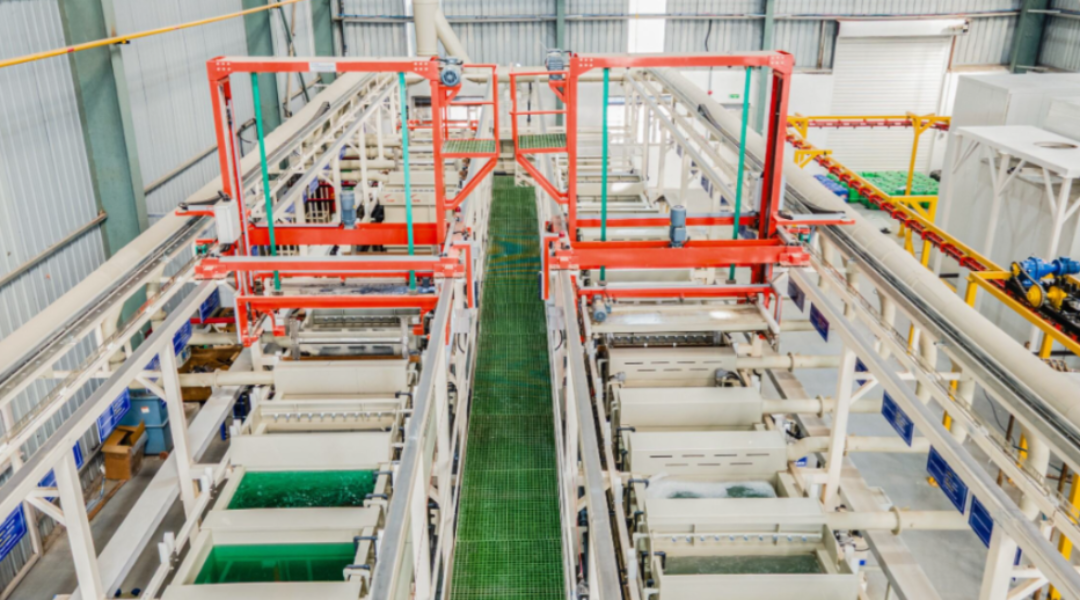
For buyers preparing a new project, the plating line and ETP should ideally be planned together. Process tank volumes, rinse arrangements, expected drag-out, water usage, drainage segregation, and production capacity can then feed directly into the wastewater assessment.
This coordinated approach helps manufacturers avoid a common problem: installing production equipment first and discovering later that the wastewater treatment facility does not match actual plant flows.
An effective ETP starts with accurate process data. Understanding where wastewater comes from, what it contains, how much is generated, and how production may change provides the strongest foundation for selecting a practical treatment system.
Keywords