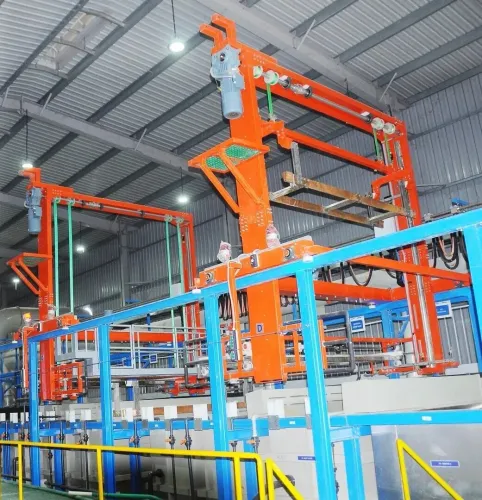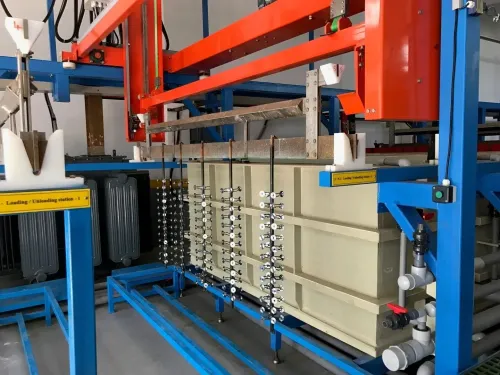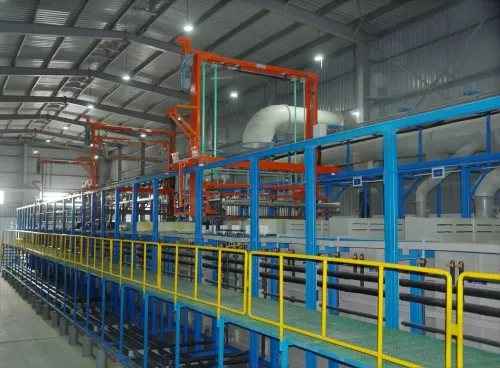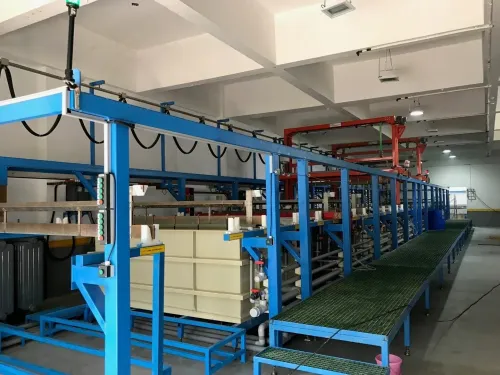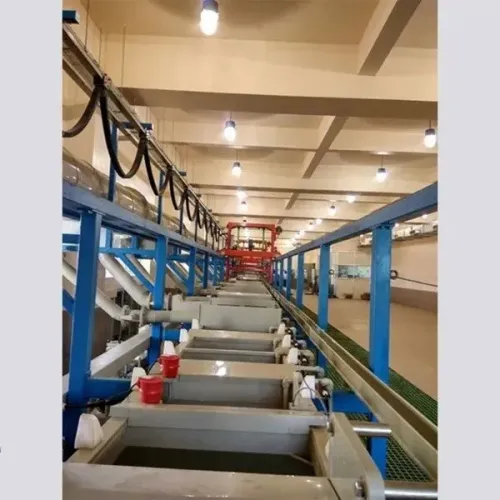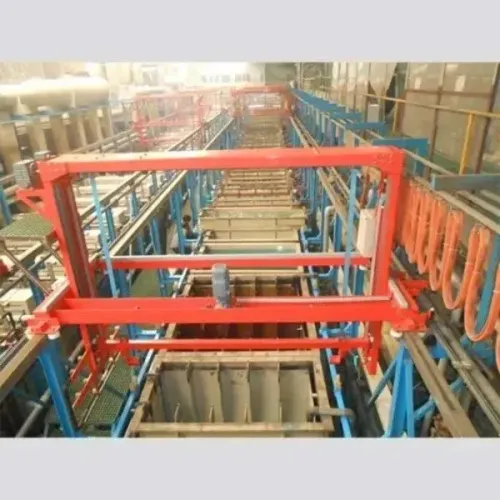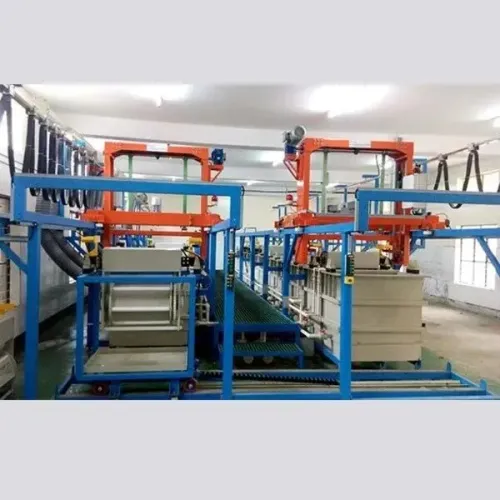
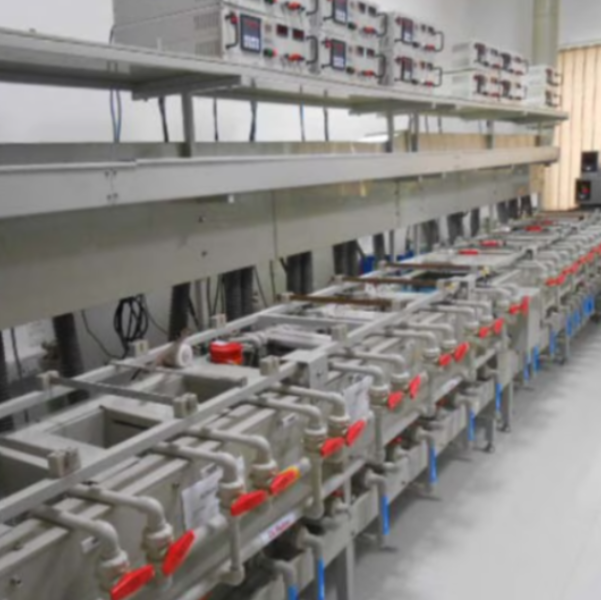
Printed circuit board manufacturing requires controlled chemical processing to establish reliable conductive pathways through drilled holes and prepare boards for subsequent metallisation stages. A PTH Line for PCB Plating therefore needs much tighter coordination of chemistry, handling, rinsing, timing, filtration, and process control than a generic collection of chemical tanks.
For PCB manufacturers and electronics production businesses in Bangalore, selecting the right plant begins with defining the board, process, capacity, and quality requirements.
Understand What the PTH Process Must Achieve
Drilled holes in a PCB initially expose non-conductive substrate material within the hole wall. The plated-through-hole process prepares these surfaces and establishes conductivity so that subsequent electroplating can build the required metallic layer.
Depending on the chosen chemistry and manufacturing process, a PTH line can involve several stages of cleaning, conditioning, micro-etching, activation, chemical deposition, rinsing, and related treatment.
Because chemical suppliers may specify particular process sequences and operating windows, equipment should be designed to support the intended chemistry rather than forcing the chemistry into an unsuitable standard line.
Board Dimensions Influence Equipment Design
Before requesting quotations, PCB manufacturers should establish:
- Maximum panel dimensions
- Panel thickness range
- Production quantity
- Required throughput
- Rack or carrier arrangement
- Process sequence
- Tank immersion requirements
- Expected expansion
Tank dimensions need to provide adequate process clearance without creating unnecessary chemical volume.
Large tanks cost more to fill, heat, circulate, maintain, and eventually replace chemically, so equipment sizing should follow production requirements closely.
Process Timing Requires Consistency
PTH processing involves multiple chemical stages where treatment time can influence process performance.
As production volume increases, manual movement can make timing less consistent. Depending on throughput, semi-automatic or automated material handling may therefore be considered.
Automation can control transfer sequences and immersion times while reducing repetitive operator movement.
However, the required automation level should still reflect production volume, product mix, maintenance capability, and investment objectives.
Rinsing Is Critical Between Chemical Stages
Chemical carryover from one tank to another can affect bath condition and increase process consumption.
A well-designed PTH line therefore needs a carefully planned rinsing strategy.
The number of rinse stages, water flow, agitation, drainage time, and board orientation can influence how effectively residual chemicals are removed.
Water consumption also needs consideration because higher rinse flow increases wastewater generation and treatment demand.
Filtration and Circulation Need Process Compatibility
Certain chemical stages may require solution circulation, filtration, temperature control, or agitation.
Pumps, filters, heaters, piping, valves, and tank construction materials must be compatible with the chemistry being used.
PCB manufacturers should therefore share process data with the equipment supplier rather than treating auxiliary systems as interchangeable components.
Evaluate the Supplier Beyond the Tank Fabrication
When selecting a provider for a PTH Line for PCB Plating, procurement teams should evaluate whether the supplier understands the complete production requirement.
Important evaluation points include:
- Ability to design around the specified process chemistry
- Tank material compatibility
- Panel handling and transfer method
- Temperature-control provisions
- Filtration and circulation
- Rinse-water management
- Electrical and PLC controls
- Extraction requirements
- Maintenance access
- Integration with wastewater handling
- Provision for future capacity
- Installation and commissioning scope
A lower initial quotation can become expensive if important supporting equipment is excluded.
Bangalore's PCB Manufacturing Context
Bangalore is one of India's major electronics, embedded systems, defence electronics, aerospace, and technology manufacturing centres. PCB manufacturers serving these industries often need equipment that supports repeatable production while fitting within existing factory infrastructure.
AK Automation Systems provides electroplating and surface finishing equipment solutions for industrial applications, including requirements associated with PCB processing.
Before finalizing a PTH project, a Bangalore PCB manufacturer should be ready with its panel dimensions, production targets, chemical process sequence, utility availability, floor layout, ventilation needs, wastewater requirements, and desired automation level.
When these inputs are defined clearly, equipment selection becomes much more precise. The resulting PTH line can then be planned around actual board production rather than adapted from a generic plating plant after installation.
Keywords