
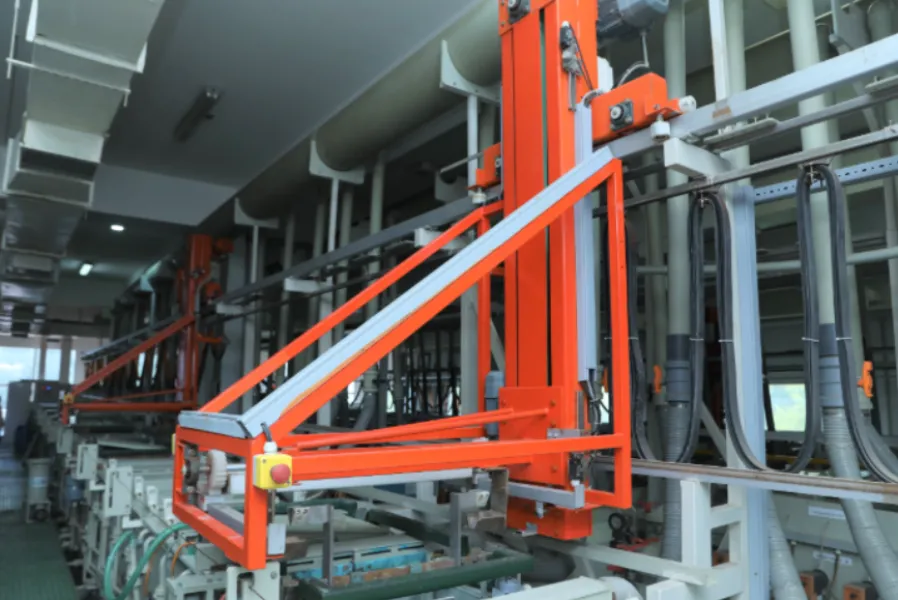
Modern manufacturing depends heavily on consistency. Whether a factory produces automotive components, electrical parts, fasteners, engineering assemblies, or precision metal products, variation in surface finishing can affect appearance, corrosion resistance, dimensional accuracy, and downstream assembly. This is why an Automatic Plating Machine has become increasingly relevant for manufacturers seeking controlled, repeatable electroplating operations.
For manufacturing units in Bangalore and other industrial regions of Karnataka, automation can also help address production challenges such as increasing volumes, process monitoring, operator dependency, and maintaining consistent treatment cycles.
How an Automatic Plating Machine Works
An automatic plating system moves components through predefined surface treatment stages with controlled process parameters. Depending on the application, these stages may include cleaning, degreasing, pickling, rinsing, activation, electroplating, passivation, additional rinsing, and drying.
Instead of operators manually transferring every load between tanks, automated handling equipment follows a programmed sequence.
The system may incorporate:
- Automated hoists or material transfer mechanisms
- Process tanks and rinse tanks
- Rectifiers and electrical controls
- PLC based sequence control
- Timers and process monitoring
- Dosing arrangements
- Heating or cooling systems
- Agitation systems
- Fume extraction arrangements
- Safety interlocks
The actual configuration depends on the plating chemistry, component geometry, required coating thickness, production capacity, and available factory space.
Why Automation Improves Process Repeatability
Manual plating lines can work effectively for certain production requirements, particularly where volumes are low or component varieties change frequently. As throughput increases, however, maintaining identical processing time across every batch becomes more difficult.
Automation provides greater control over variables such as immersion duration, transfer sequence, current application, rinsing time, and production cycle.
This can help manufacturers achieve more repeatable surface finishing while reducing unnecessary variations caused by manual handling.
Automated movement can also improve production planning. Plant managers can estimate cycle times more accurately and coordinate plating operations with machining, fabrication, inspection, assembly, and dispatch schedules.
When Does an Automatic System Make Sense
Automation is not automatically the right solution for every plating unit. Buyers should first examine their actual production requirements.
An automatic system becomes particularly relevant when:
- Production volumes are consistently high.
- Similar components are processed repeatedly.
- Tight control over treatment time is important.
- Manual material movement creates a bottleneck.
- Production traceability needs improvement.
- Future capacity expansion is expected.
- Process consistency is becoming difficult to maintain manually.
The decision should therefore be based on process requirements rather than automation alone.
Rack and Barrel Applications Need Different Planning
The way components are handled also influences machine design.
Rack plating is commonly considered for components that require controlled positioning, electrical contact, or protection from component-to-component impact. Barrel systems are often suitable for smaller bulk components where parts can be processed together.
Production volume, component weight, geometry, coating specification, drainage characteristics, and surface quality requirements should all be reviewed before selecting the handling concept.
Planning an Automated Plating Facility in Bangalore
Bangalore has a diverse manufacturing ecosystem covering automotive components, aerospace engineering, electronics, electrical products, precision machining, industrial equipment, and contract manufacturing. Surface finishing requirements can therefore vary considerably between facilities.
Before finalizing equipment, a manufacturer should document the complete process flow, daily production target, largest component dimensions, expected load per batch, plating chemistry, utility requirements, exhaust requirements, wastewater generation, and available floor area.
AK Automation Systems works with industrial buyers requiring electroplating and surface finishing plant configurations based on such operating parameters.
A well-planned Automatic Plating Machine should ultimately do more than automate component movement. It should create a controlled production sequence in which material handling, electrical systems, tanks, ventilation, rinsing, process timing, and safety provisions work together.
For Bangalore manufacturers evaluating higher production capacity, the most useful starting point is a detailed assessment of components, chemistry, throughput, utilities, environmental controls, and future production requirements. That assessment helps determine whether full automation, partial automation, or a customized plating arrangement provides the most practical solution.
Keywords


