
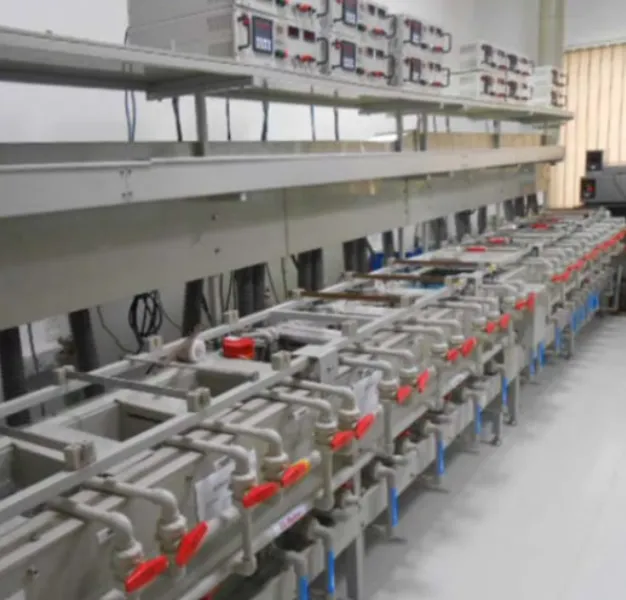
Printed circuit boards form the backbone of modern electronic products, making precision manufacturing essential. PCB plating and plated through-hole (PTH) processes require specialised equipment capable of delivering consistent coatings, tight process control, and high production efficiency.
As electronics manufacturing continues to expand in Bangalore and other industrial regions of Karnataka, selecting the right PCB plating line has become an important investment for companies focused on quality, scalability, and long-term competitiveness.
Understanding PCB Plating and PTH Processes
PCB plating involves depositing metal onto conductive surfaces, while PTH processing creates reliable electrical connections between different layers of a circuit board.
These processes demand:
- Precise chemical control
- Uniform plating thickness
- Accurate timing
- Stable production conditions
- Clean manufacturing environments
Any variation can affect electrical performance and product reliability.
Components of a PCB Plating Line
A modern plating line generally includes:
- Cleaning stations
- Micro-etching units
- Activation tanks
- Copper plating tanks
- PTH processing stations
- Rinsing sections
- Drying systems
- Automatic material handling
- PLC-based control systems
- Fume extraction equipment
Each stage contributes to achieving consistent production quality.
Why Automation Is Important
Electronics manufacturing demands extremely high process accuracy.
Automated PCB plating systems provide:
- Repeatable production cycles
- Reduced operator error
- Improved process consistency
- Higher throughput
- Better quality documentation
- Reduced chemical waste
Automation also supports traceability, which is increasingly important for OEMs and export-oriented manufacturers.
Factors to Evaluate Before Purchasing
Before investing in PCB plating equipment, consider:
Production Capacity
The system should support both current output and future expansion.
Product Complexity
Different board sizes and layer counts require flexible processing capabilities.
Chemical Compatibility
Equipment materials should withstand prolonged exposure to process chemicals.
Cleanliness Standards
The plant layout should minimise contamination and simplify maintenance.
Digital Monitoring
Real-time process monitoring improves quality control and supports preventive maintenance.
Environmental Considerations
PCB manufacturing requires careful management of chemicals and wastewater.
Modern facilities often include:
- Water recycling systems
- Chemical recovery units
- Fume extraction
- Air scrubbers
- Wastewater treatment integration
- Energy-efficient automation
These systems help manufacturers improve sustainability while maintaining production efficiency.
Common Mistakes During Equipment Selection
Procurement teams sometimes focus primarily on equipment cost.
Other important considerations include:
- Engineering support
- Commissioning assistance
- Operator training
- Spare parts availability
- Upgrade flexibility
- Maintenance requirements
Evaluating the complete lifecycle of the equipment leads to better long-term value.
The Importance of Custom Engineering
PCB manufacturing processes differ depending on product design, production volume, and customer requirements.
Many electronics manufacturers work with engineering companies such as AK Automation Systems to develop customised PCB plating and PTH line solutions that integrate efficiently into existing production facilities while supporting future growth.
Preparing for the Next Stage of Manufacturing
PCB plating technology continues to evolve with greater automation, smarter process monitoring, and improved environmental performance. Investing in a well-designed plating line enables manufacturers to improve quality, reduce operating costs, and meet the increasingly demanding requirements of the electronics industry.
Keywords


